
Hair Clipper Guard Sizes in mm — #0 to #12 Conversion Chart (Wahl, Andis, Oster)
What is a blade 3 in mm? 10mm. Full guard-to-mm conversion chart: #0 (1.5mm) through #12 (38mm) for Wahl, Andis, Oster & BaByliss. Compare brand differences + pro barber tips.
If you have ever asked "what is a number 3 guard in millimeters?" or tried to match a Wahl guard to an Andis equivalent, you are not alone. Guard sizing is one of the most confusing aspects of clipper work for new barbers and home users alike. This guide provides a definitive conversion chart covering guard numbers #0 through #12 in millimeters and inches, plus brand-by-brand comparisons for Wahl, Andis, Oster, and BaByliss.
Understanding guard sizes is also critical for communicating with clients. When someone asks for a "number 4 on the sides," they expect exactly 13mm of hair left. Getting this wrong means an unhappy client and a reputation hit. Let's make sure that never happens.
Universal Clipper Guard Size Chart (#0 - #12)
The table below shows the standard guard numbering system used across most major clipper brands. While minor variations exist between manufacturers (covered in the brand comparison section below), these measurements represent the industry standard.
| Guard # | Millimeters (mm) | Inches | Typical Use |
|---|---|---|---|
| #0 (No guard) | 0.5 - 1.5mm | 1/64" - 1/16" | Skin fades, bald fades (blade only, no guard) |
| #0.5 | 1.5mm | 1/16" | Very close buzz, low skin fades |
| #1 | 3mm | 1/8" | Short buzz cuts, fade transitions |
| #1.5 | 4.5mm | 3/16" | Between buzz and short crop |
| #2 | 6mm | 1/4" | Standard buzz cut, short crew cut |
| #3 | 10mm | 3/8" | Classic crew cut, medium buzz |
| #4 | 13mm | 1/2" | Longer crew cut, side taper start |
| #5 | 16mm | 5/8" | Medium-length top, brush cut |
| #6 | 19mm | 3/4" | Longer all-over cuts |
| #7 | 22mm | 7/8" | Long clipper cut, top blending |
| #8 | 25mm | 1" | Maximum standard guard length |
| #10 | 32mm | 1-1/4" | Extended guards (Wahl), long cuts |
| #12 | 38mm | 1-1/2" | Longest available guard, scissors territory |
Guard vs Blade: Understanding the Difference
A guard (also called a guide comb or attachment comb) is a plastic piece that snaps over the clipper blade. It spaces the blade away from the scalp by a fixed distance, controlling how much hair is left. The underlying blade does the cutting; the guard controls the length.
A blade is the metal cutting component itself. Detachable blades (like the A5 system) come in different sizes that cut to specific lengths without any guard. Adjustable taper blades change their cutting length via the clipper's lever.
For a detailed breakdown of blade numbering, see our Clipper Blade Size Chart.

Brand-by-Brand Guard Size Comparison
While the numbering system is largely standardized, there are slight measurement differences between brands. These differences are typically 0.5mm or less for the same guard number, but they can matter for precision fading work.
Wahl Guard Sizes
Wahl uses the standard numbering from #0.5 to #8, plus extended guards (#10, #12) in their premium sets. Wahl guards fit most Wahl home and professional clippers including the Senior, Magic Clip, Legend, and Super Taper. Measurements follow the standard chart above with no significant deviations.
Andis Guard Sizes
Andis markets their guards as "attachment combs" and follows the same #0 to #8 numbering. The Andis Master and Fade Master use the same guard set. Andis also makes a magnetic guard series with stronger attachment for heavy-duty work. Lengths match the standard chart within 0.5mm.
Oster Guard Sizes
Oster uses both the standard guide comb system (for their 76, Fast Feed, and similar adjustable-blade clippers) and A5 comb attachments (for their A5 detachable blade clippers). The numbering differs between these two systems. Oster A5 comb attachments snap onto A5 blades and are numbered by the final cutting length they produce in combination with the base blade underneath.
BaByliss Guard Sizes
BaBylissPRO guards follow the standard numbering and are designed specifically for BaByliss clipper housings. Guard lengths match the industry standard chart. Their premium guards feature tapered teeth for smoother blending during fades.
| Guard # | Wahl | Andis | Oster | BaByliss |
|---|---|---|---|---|
| #1 | 3mm | 3mm | 3mm | 3mm |
| #2 | 6mm | 6mm | 6mm | 6mm |
| #3 | 10mm | 10mm | 10mm | 10mm |
| #4 | 13mm | 13mm | 13mm | 13mm |
| #5 | 16mm | 16mm | 16mm | 16mm |
| #6 | 19mm | 19mm | 19mm | 19mm |
| #7 | 22mm | 22mm | 22mm | 22mm |
| #8 | 25mm | 25mm | 25mm | 25mm |
How Professional Barbers Choose Guard Sizes
Experienced barbers rarely rely on a single guard. Most fades and tapers use 3 to 5 guard sizes in a single haircut, working from shorter at the bottom to longer at the top. Here is how professionals typically approach guard selection:
For Skin Fades
Start with no guard (blade only, lever closed for ~0.5mm) at the hairline. Open the lever to ~1.5mm for the first transition zone. Switch to a #0.5 guard, then #1, blending each line before moving up. The skill is in the blending, not the guard itself. Most professional fades use 4 to 5 guard transitions to achieve a seamless gradient from skin to the desired top length.
For Crew Cuts
Use #3 or #4 on top (10-13mm), #2 on the upper sides (6mm), and #1 tapering down to the neckline (3mm). This creates a clean, classic silhouette with natural-looking graduation. For clients who prefer a bit more length on top, a #5 guard (16mm) gives a fuller look while still maintaining the tapered sides characteristic of a proper crew cut.
For Buzz Cuts
One guard, all over. #2 (6mm) is the most popular buzz cut length. #1 (3mm) is the "military" buzz. #3 (10mm) leaves enough length to show hair texture and direction. For a buzz with a subtle taper, use the primary guard on top and sides, then switch down one size for the last inch above the neckline and around the ears.
For Taper Cuts
Tapers are similar to fades but the transition is more gradual and typically starts higher on the head. Begin with #3 or #4 on the sides, blending down to #2, then #1 at the hairline. Unlike a fade, a taper does not go down to skin. The bottom of a taper usually stops at #1 (3mm) or #0.5 (1.5mm), maintaining some visible hair length throughout.
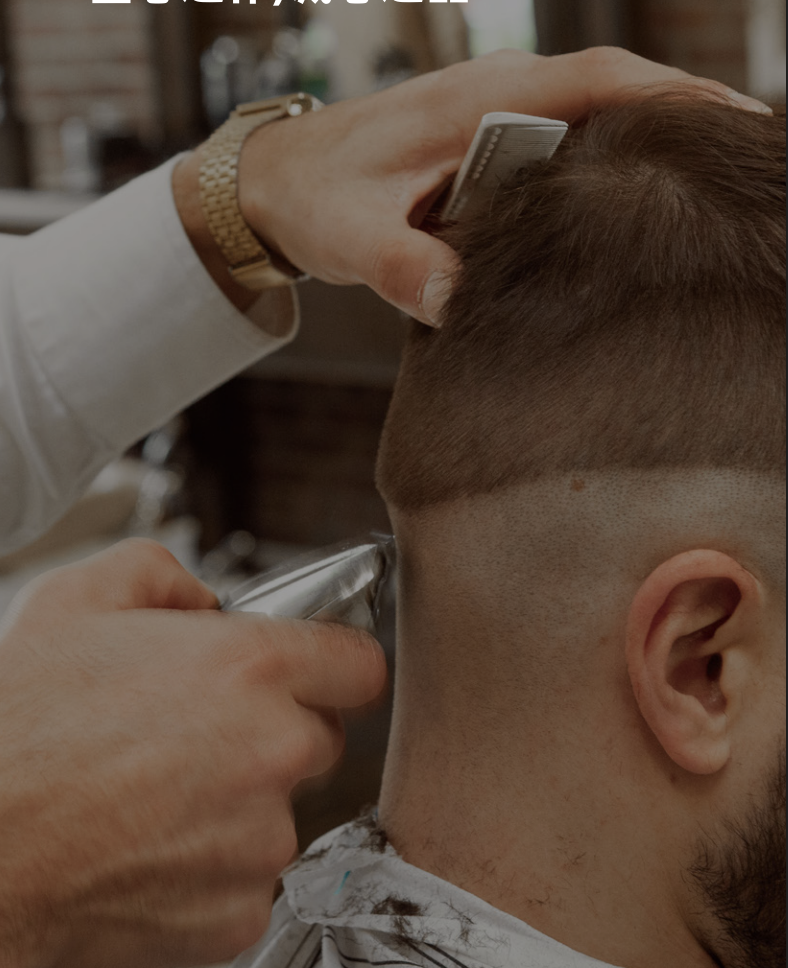
Why Blade Quality Matters More Than Guard Choice
Guards control length, but the blade determines cut quality. A dull or poorly manufactured blade will pull hair, leave uneven lines, and generate excessive heat regardless of which guard you use. The guard simply cannot compensate for a bad blade.
This is where manufacturing precision matters. At SUMTHIN, we produce clipper blades using MIM (Metal Injection Molding) powder metallurgy, achieving dimensional tolerances of ±0.02mm. As one of China's top clipper blade manufacturers with a 360-person factory, that level of precision means the blade's cutting edge is perfectly uniform across every tooth, which translates to consistent cutting length across the entire blade width. When you pair a precision blade with a guard, the stated guard length is the actual length you get, with no variation from left to right.
By contrast, stamped blades with looser tolerances (±0.1mm) can produce uneven cuts where one side of the blade cuts slightly shorter than the other. The effect is subtle but visible under salon lighting, especially on fades.
Common Haircut Styles and Their Guard Sizes
Knowing which guard to grab for a specific style saves time and reduces mistakes. Here is a quick reference for the most requested haircut styles and the guard sizes that produce them:
| Haircut Style | Top | Sides | Back/Neckline |
|---|---|---|---|
| Skin Fade | #4-#6 (13-19mm) or scissors | No guard → #0.5 → #1 (graduated) | No guard (blade only) |
| Mid Fade | #4-#5 (13-16mm) | #1 → #2 (graduated) | #0.5 → #1 |
| Buzz Cut (standard) | #2 (6mm) all over | #2 (6mm) | #2 (6mm) |
| Military Buzz | #1 (3mm) all over | #1 (3mm) | #0.5 (1.5mm) |
| Crew Cut | #3-#4 (10-13mm) | #2 (6mm) | #1 (3mm) |
| Ivy League | #5-#6 (16-19mm) or scissors | #2-#3 (6-10mm) | #1-#2 (3-6mm) |
Note that these are starting points. Hair texture, density, and growth direction all affect the final result. Curly or coarse hair appears shorter than straight hair at the same guard length, so you may need to go one guard size longer on curly-haired clients to achieve the same visual length.
Metal vs Plastic Guards: Does It Matter?
Most clipper guards are injection-molded plastic (nylon or ABS). Premium aftermarket guards are sometimes made from stainless steel or aluminum. The material difference matters more than most barbers realize.
Plastic guards are lightweight, inexpensive, and flexible enough to snap securely onto blade housings. However, plastic teeth can flex under pressure, especially on thick or coarse hair. This flexing causes the guard to lift slightly from the blade, resulting in an inconsistent cut length. After months of daily use, plastic guards can also warp from repeated heat exposure, further degrading accuracy.
Metal guards are rigid, maintaining consistent spacing under all cutting conditions. They do not flex, warp, or degrade over time. The trade-off is higher cost (typically 3-4x more than plastic), slightly more weight, and the potential to scratch clipper housings if they fit too tightly.
For professional barbers doing precision fades, metal guards are worth the investment. For home use and general cutting, plastic guards perform perfectly well.
Guard Compatibility Across Brands
A common question: "Can I use Wahl guards on my Andis clipper?" The short answer is generally no. While guard sizes are standardized in length, the attachment mechanism differs between brands. Wahl guards snap onto Wahl blade housings, Andis guards onto Andis housings, and so on. Universal aftermarket guards exist but often have a looser fit that can shift during cutting.
For blade compatibility across brands, the situation is different. The A5 detachable blade system is truly universal. For a complete breakdown, see our Clipper Blade Compatibility Guide. You can also check our compatibility database for your specific clipper model.
Frequently Asked Questions
What is a #3 blade in mm?
This depends on whether you mean a #3 guard or a #3 blade. A #3 guard leaves 10mm of hair. A #3F detachable blade (A5 system) cuts to 13mm. These are two completely different sizing systems. When in doubt, always confirm with your client whether they mean a guard number or a blade number.
What guard size should I use for a 6mm cut?
Use a #2 guard. The #2 guard spaces the blade 6mm from the scalp, leaving approximately 6mm (1/4 inch) of hair. This is one of the most popular lengths for buzz cuts and the lower portion of crew cuts.
Do Wahl guards fit on Andis clippers?
Not directly. Wahl and Andis use different guard attachment mechanisms. However, universal aftermarket guards are available that fit multiple brands. For the best fit and cutting accuracy, use guards designed for your specific clipper brand.
Why does my guard leave the hair longer on one side?
This is almost always a blade issue, not a guard issue. If the blade's cutting edge is uneven due to wear, damage, or manufacturing inconsistency, the guard cannot compensate. Try cleaning and re-tensioning the blade first. If the problem persists, the blade likely needs sharpening or replacement. Our MIM-manufactured blades maintain edge uniformity across the full width, minimizing this issue.
Can I use guards on A5 detachable blades?
Yes. A5-compatible guide combs (also called snap-on combs) attach over A5 blades to extend the cutting length. These are commonly used by pet groomers who want A5 blade precision with the ability to leave longer coat lengths. The comb attaches to the blade, and the blade snaps onto the clipper.