
Custom Powder Metallurgy Parts: From Your Drawing to Mass Production
How to order custom powder metallurgy parts from a MIM manufacturer. Covers materials (316L, 17-4PH, titanium), tolerances, tooling costs, lead times, and how to evaluate powdered metal parts manufacturers.
If you need complex metal components at production volumes — gears with internal features, surgical instruments with thin walls, or lock cylinders with intricate keyways — custom powder metallurgy parts manufactured via MIM (Metal Injection Molding) may be the most cost-effective path from design to finished part.
This guide covers everything a product engineer or procurement manager needs to know before ordering custom powdered metal parts: how the process works, what materials are available, realistic tolerances and costs, and how to evaluate a powder metallurgy manufacturer.
What Are Custom Powder Metallurgy Parts?
Powder metallurgy (PM) is a family of manufacturing processes that form metal parts from fine metal powders. Within PM, Metal Injection Molding (MIM) is the process best suited for custom, complex, small-to-medium parts at production volumes.
The MIM process works in four stages:
- Feedstock preparation — Fine metal powder (typically 2-20 micron particle size) is mixed with a polymer binder to create an injectable feedstock.
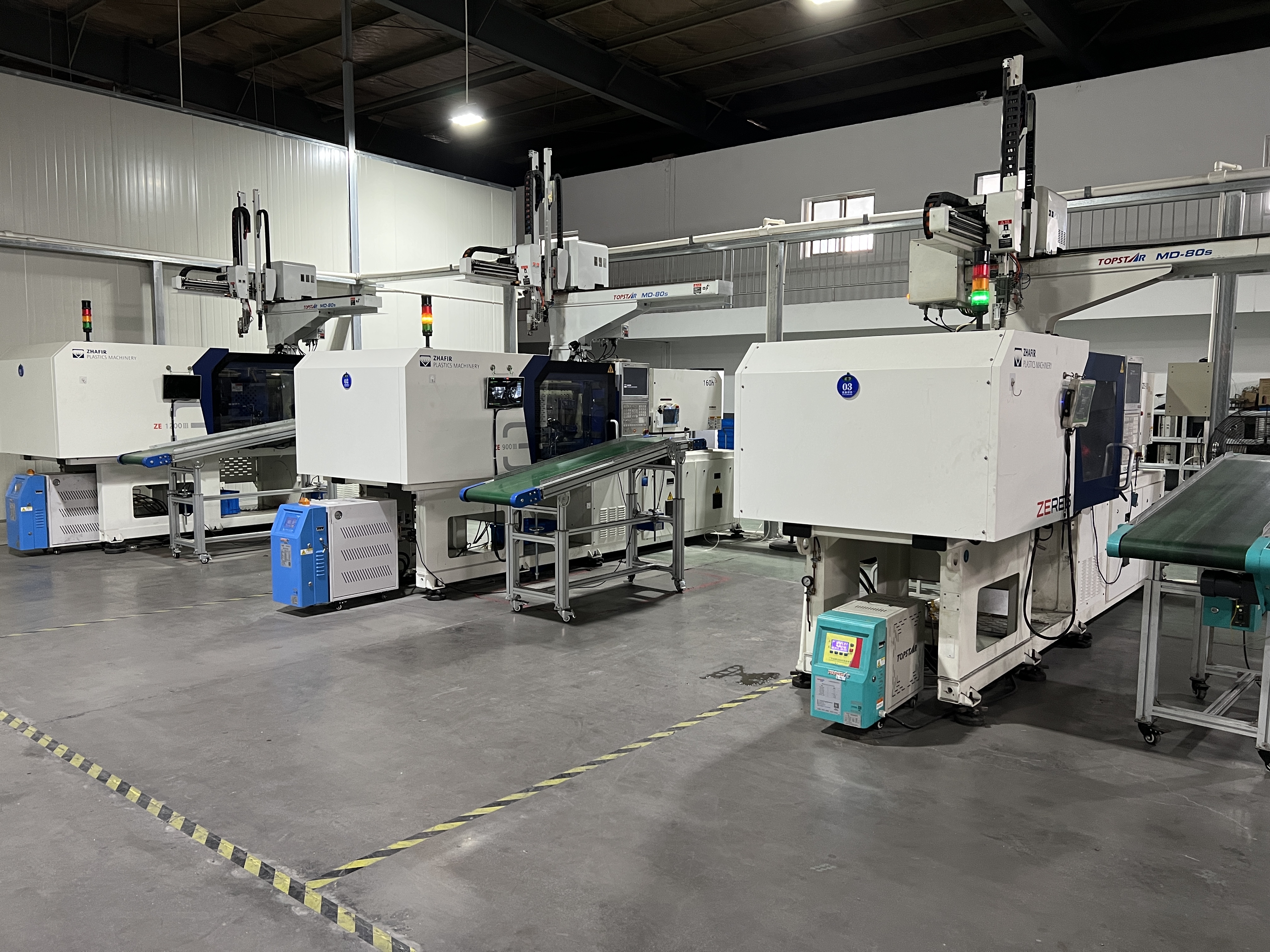
- Injection molding — The feedstock is injected into a precision mold at high pressure, just like plastic injection molding. Cycle time: 15-45 seconds per shot.
- Debinding — The polymer binder is removed through solvent or thermal debinding, leaving a fragile "brown part" that is approximately 60% metal.
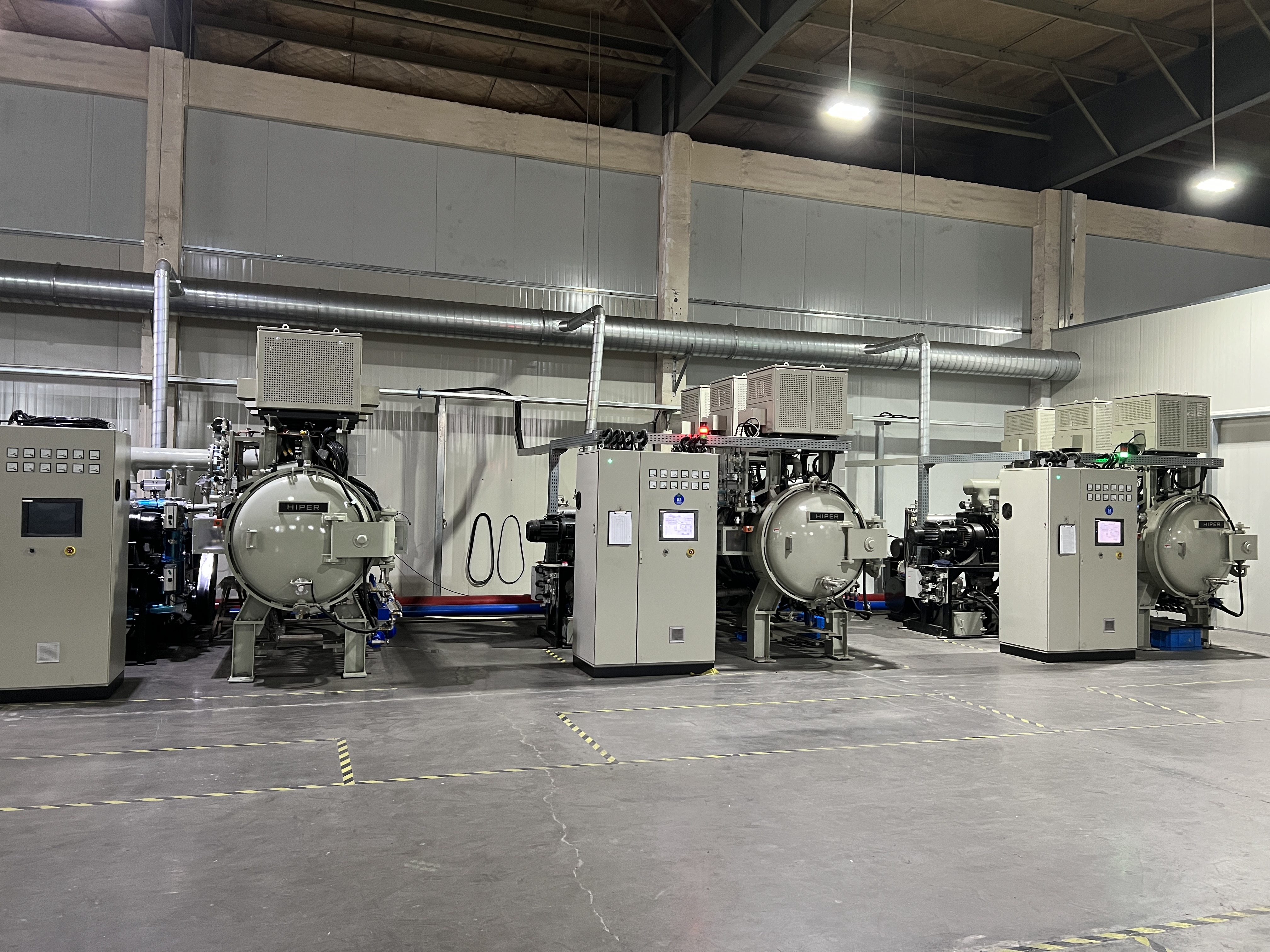
- Sintering — The brown part is heated to 1,250-1,400°C in a controlled atmosphere furnace, causing the metal particles to fuse to 96-99% theoretical density. The part shrinks uniformly by approximately 15-20%.
The result is a fully dense metal component with mechanical properties comparable to wrought metal — ready for heat treatment, surface finishing, or direct use. For a deeper look at MIM across industries, read our guide to 50+ MIM applications.
Materials Available for Custom MIM Parts
At our facility, we process the following MIM materials for custom orders:
| Material | Key Properties | Typical Applications |
|---|---|---|
| 316L Stainless Steel | Corrosion resistant, FDA-approved, 500 MPa tensile | Medical instruments, food equipment, marine hardware |
| 17-4PH Stainless Steel | High strength (1,100 MPa), HRC 28-45, corrosion resistant | Aerospace brackets, firearm components, surgical tools |
| 440C Stainless Steel | Ultra-hard (HRC 58-62), wear resistant | Clipper blades, cutting tools, valve seats |
| Fe-2Ni / Fe-8Ni | Good hardness, low cost, heat treatable | Gears, lock parts, power tool components |
| 4140 Low Alloy Steel | High fatigue strength, HRC 45-55 after heat treatment | Automotive gears, connecting rods, cam followers |
| Ti-6Al-4V Titanium | Lightweight, biocompatible, 900 MPa tensile | Medical implants, dental brackets, aerospace fasteners |
Tolerances, Surface Finish, and Design Guidelines
Understanding what MIM can and cannot achieve helps you design parts that maximize the process advantages:
- Dimensional tolerance: ±0.3% of nominal dimension as-sintered. For a 10mm feature, that is ±0.03mm. Tighter tolerances (down to ±0.05mm) achievable with secondary machining on critical features only.
- Surface finish: Ra 1.0-3.2 μm as-sintered (equivalent to fine machined finish). Polishing, tumbling, or bead blasting available for cosmetic surfaces.
- Minimum wall thickness: 0.3mm (practical minimum 0.5mm for structural integrity).
- Maximum part weight: 200g (sweet spot: 1-50g for optimal cost-effectiveness).
- Draft angles: 0.5-1° recommended for easier mold ejection, but zero-draft is possible for short features.
- Undercuts and threads: Internal threads and undercuts are possible with side-pulls or collapsible cores in the mold.
How Much Do Custom Powder Metallurgy Parts Cost?
MIM costs have two components: tooling (one-time) and per-piece production cost.
Tooling costs depend on part complexity and mold cavitation:
- Simple single-cavity mold: $3,000-$8,000
- Medium complexity, 2-4 cavities: $8,000-$25,000
- High complexity with side-pulls or multi-cavity: $25,000-$50,000
Per-piece costs depend on material, part weight, and volume:
- Simple stainless steel part (5g, 10K+ annual volume): $0.30-$0.80/piece
- Medium complexity part (15g, 10K+ volume): $0.80-$2.50/piece
- Complex part with heat treatment and coating (25g): $2.50-$6.00/piece
Compared to CNC machining the same parts, MIM typically saves 40-60% on per-piece cost at volumes above 5,000-10,000 pieces annually. The break-even point (where MIM becomes cheaper than CNC despite the mold investment) usually occurs between 2,000-5,000 pieces. For a detailed cost analysis, see our MIM vs CNC machining comparison.
Lead Times: From Drawing to Finished Parts
A typical custom MIM project follows this timeline:
| Stage | Duration | What Happens |
|---|---|---|
| Feasibility review | 1-3 days | We review your drawing, confirm MIM suitability, recommend material |
| Quotation | 3-5 days | Detailed quote with tooling cost, piece price at various volumes, and timeline |
| Mold design & fabrication | 15-25 days | In-house mold design and CNC machining of the injection mold |
| First samples (T1) | 5-7 days | First injection + debinding + sintering cycle, dimensional inspection |
| Sample approval | Depends on you | You inspect samples; we iterate if needed (T2, T3 rounds) |
| Mass production | 15-30 days | Full production run with in-line quality inspection |
Total time from drawing to first delivery: typically 45-65 business days. Reorders ship within 15-25 days since the mold is already made.
How to Evaluate a Powder Metallurgy Manufacturer
Not all MIM manufacturers are equal. When evaluating custom powdered metal parts suppliers, ask these questions:
- Do they have in-house mold design and fabrication? Manufacturers who outsource molds have less control over quality and timeline. At SUMTHIN, our mold shop is inside the same 40,000 m² facility as our MIM production line.
- What is their sintering capacity? Sintering is the bottleneck in MIM production. Ask about furnace type (continuous mesh belt vs batch), atmosphere control (hydrogen, nitrogen, vacuum), and monthly throughput.
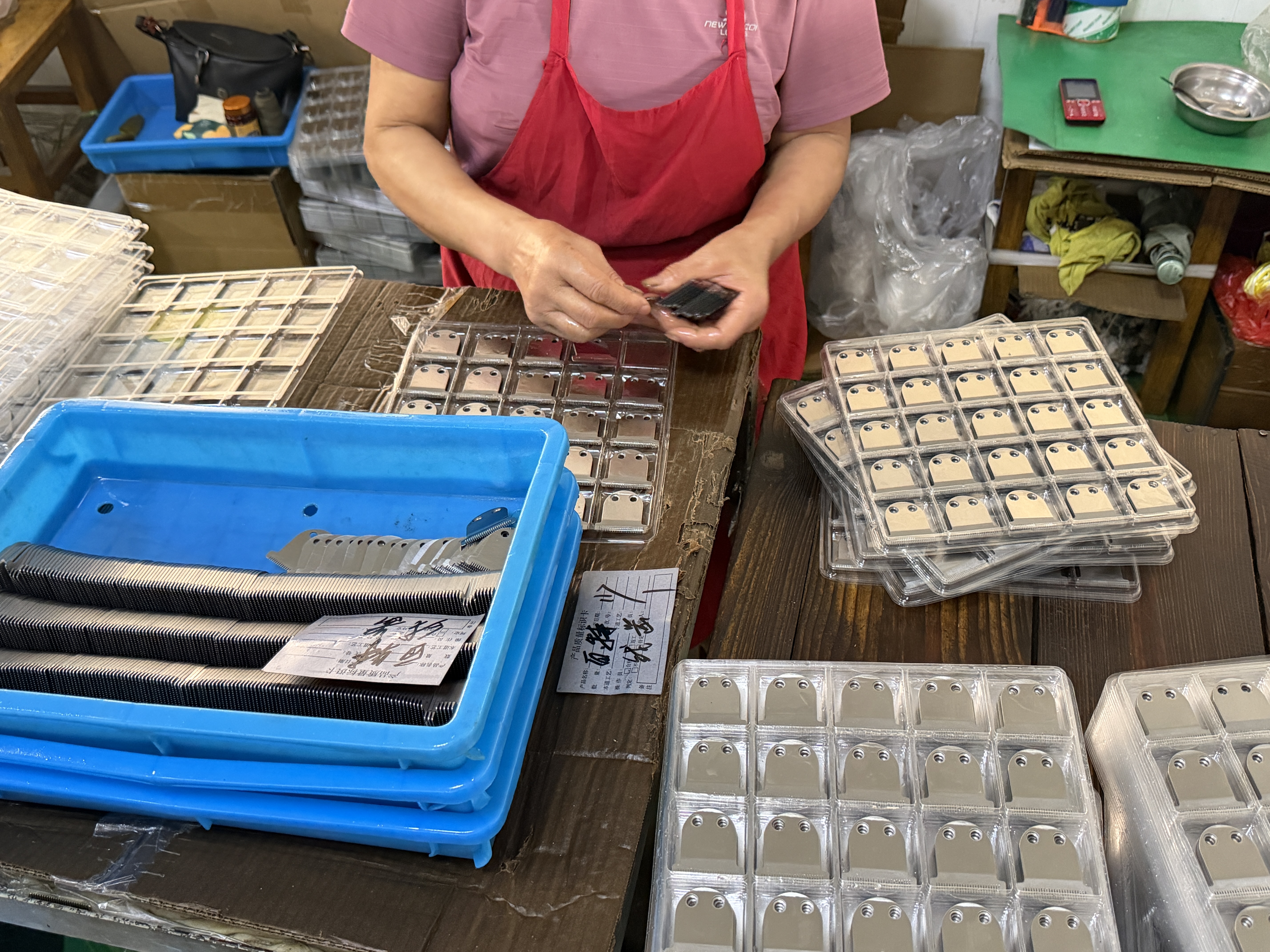
- Can they show parts similar to yours? Experience with your material and part complexity matters more than generic MIM experience. Our 20+ years manufacturing 200+ SKUs of precision clipper blades in HRC 60-62 hardened stainless steel means we have process mastery for demanding applications.
- What quality certifications do they hold? ISO 9001 is baseline. For medical parts, ask about ISO 13485. For automotive, IATF 16949. Our facility holds ISO 9001 and ISO 14001 certifications and is designated a National High-Tech Enterprise.
- Can they provide material test reports? Density, hardness, tensile strength, and chemical composition test reports should be standard for every production batch.
Why Blade Manufacturers Make the Best MIM Partners
This may seem counterintuitive, but a clipper blade manufacturer like SUMTHIN is often a better MIM partner for custom parts than a general-purpose MIM shop. Here is why:
Clipper blades are among the most demanding MIM applications. Each blade requires edge geometry accurate to ±0.02mm, hardness uniformity across HRC 60-62 (with zero soft spots), and zero porosity at cutting surfaces. These tolerances exceed what most industrial MIM parts require. When you bring us an automotive gear or a medical instrument, our quality bar is already set higher than what your part demands.
Our blade business also gives us massive throughput: we produce over 5 million blades per year, which keeps our sintering furnaces running continuously and our MIM process parameters precisely calibrated. This operational maturity translates directly to consistent quality on custom parts.