
MIM vs CNC Machining: When to Choose Metal Injection Molding Over CNC [Cost Comparison]
Detailed comparison of MIM (Metal Injection Molding) vs CNC machining covering cost per piece, tooling investment, tolerances, materials, surface finish, and production volume breakpoints.
When you need custom metal parts — gears, brackets, medical instruments, or blade components — two manufacturing processes dominate the conversation: CNC machining and Metal Injection Molding (MIM). Each has clear advantages, and choosing wrong can cost you 2-3x more per part than necessary.
This comparison gives you the specific data points to make the right decision based on your part geometry, material, volume, and budget.
The 30-Second Decision Framework
Choose MIM when: Your part is small (<200g), geometrically complex (would need 3+ CNC setups), and you need 5,000+ pieces per year.
Choose CNC when: Your part is large or simple, you need fewer than 2,000 pieces, or you need aluminum (MIM does not support aluminum).
Now let us look at the details.
Cost Per Piece: Where MIM Wins (and Where It Doesn't)
This is the comparison most engineers care about. Here is a real-world cost breakdown for a representative part: a 15g stainless steel gear with 18 teeth, internal keyway, and HRC 45 hardness requirement.
| Cost Factor | CNC Machining | MIM |
|---|---|---|
| Tooling (one-time) | $0 (fixtures only) | $12,000 (injection mold) |
| Material cost per piece | $1.80 (50% waste from bar stock) | $0.35 (97% material utilization) |
| Machine time per piece | $4.50 (12 min × 2 setups) | $0.30 (30-second injection cycle) |
| Deburring / finishing | $0.80 | $0.15 (minimal, near-net-shape) |
| Heat treatment | $0.50 | $0.40 (batch sintering already done) |
| Total per piece (at 10K volume) | $7.60 | $2.40 |
| Total per piece (at 1K volume) | $7.60 | $14.40 (mold cost dominates) |
Geometric Complexity: MIM's Greatest Advantage
MIM can produce features that are impossible or prohibitively expensive to CNC machine:
- Internal channels and passages: MIM molds can form internal geometries during injection. CNC would require EDM (electrical discharge machining) or multi-axis milling at 5-10x the cost.
- Thin walls: MIM produces walls as thin as 0.3mm consistently. CNC machining thin walls causes vibration, deflection, and frequent tool breakage.
- Undercuts and cross-holes: MIM molds with side-pulls produce these features in the molding step. CNC requires additional setups and fixturing.
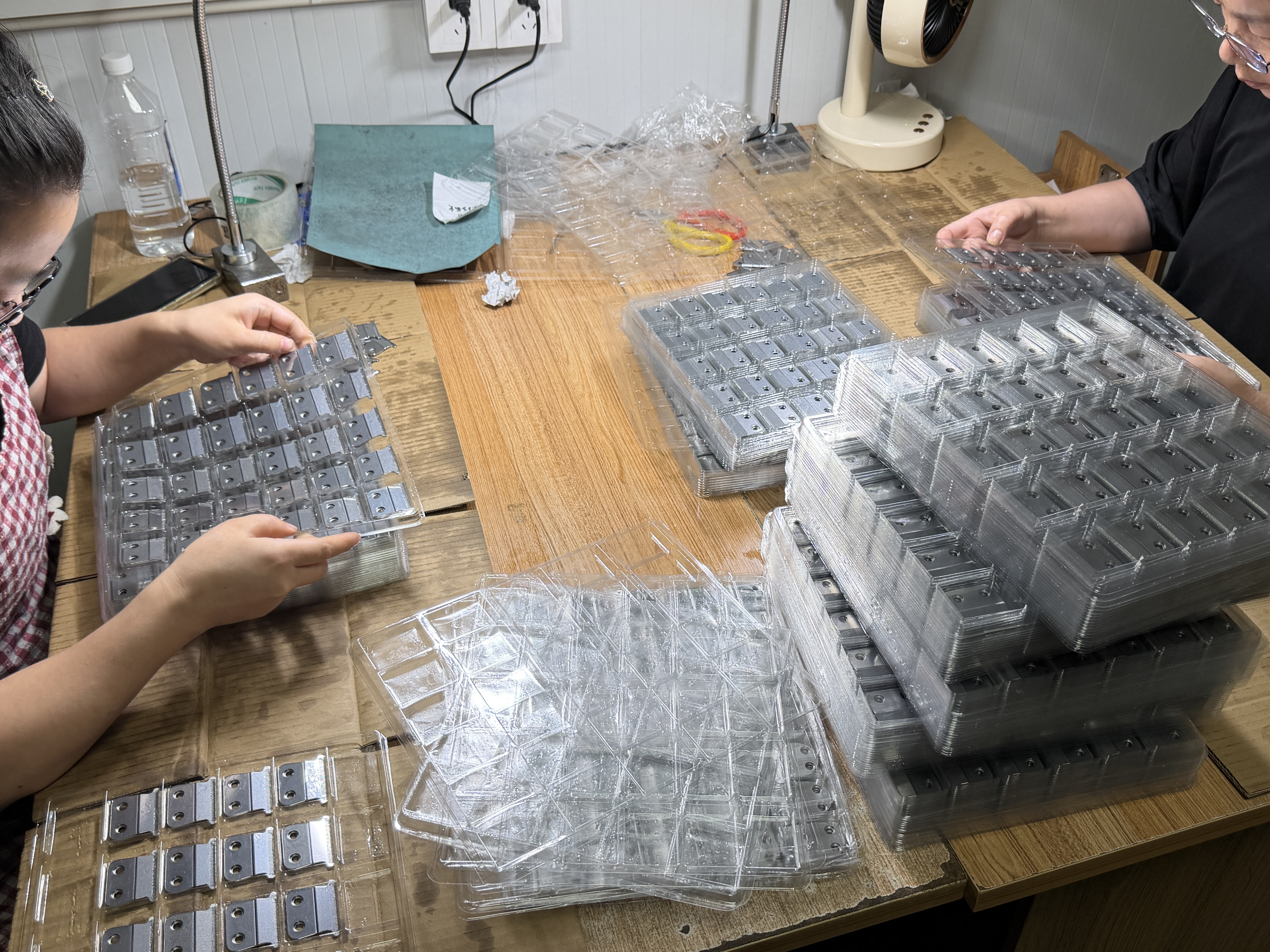
- Complex tooth profiles: Gear teeth, blade edges, and ratchet mechanisms come out of the MIM mold net-shape. This is why precision clipper blades are manufactured via MIM — the 30+ tooth profile with guide rails would require 4-5 CNC operations.
Rule of thumb: If your CNC part requires 3 or more setups (repositioning the part in different fixtures), MIM will almost certainly be cheaper at production volumes.
Tolerance Comparison
| Specification | CNC Machining | MIM (As-Sintered) | MIM + Secondary Machining |
|---|---|---|---|
| Dimensional tolerance | ±0.01mm | ±0.3% (±0.03mm on 10mm) | ±0.01mm on critical features |
| Surface finish (Ra) | 0.4-1.6 μm | 1.0-3.2 μm | 0.4 μm with polishing |
| Flatness | 0.005mm | 0.05mm | 0.01mm with coining |
| Position accuracy | ±0.01mm | ±0.05mm | ±0.01mm with machining |
Practical takeaway: If your tightest tolerance is ±0.05mm or wider, MIM can deliver as-sintered with no secondary machining. If you need ±0.01mm on specific features (bearing bores, mating surfaces), a hybrid approach works best: MIM for the overall shape, then CNC-machine only the critical surfaces. This hybrid costs 20-30% less than fully CNC machining the entire part.
Material and Mechanical Properties
| Property | CNC (Wrought Metal) | MIM (Sintered) |
|---|---|---|
| Density | 100% theoretical | 96-99% theoretical |
| Tensile strength | Baseline (100%) | 92-98% of wrought |
| Hardness (after heat treatment) | Full specification | Full specification (HRC 60-62 achievable) |
| Fatigue life | Baseline (100%) | 85-95% of wrought |
| Weldability | Full | Full (at 96%+ density) |
| Available materials | Any machinable metal including aluminum | Steel, stainless steel, titanium (NOT aluminum) |
For most applications, the 2-5% property gap between MIM and wrought metal is insignificant. Our MIM clipper blades operate at HRC 60-62 hardness and cut millions of haircuts without issue — the same hardness specification as premium forged Japanese blades.
Production Speed and Scalability
This is where MIM creates a massive advantage for production volumes:
- CNC: 5-15 minutes per part (depending on complexity). A single CNC machine produces 30-100 parts per day. Scaling requires buying more machines and hiring more operators.
- MIM: 15-45 seconds per injection cycle. A single MIM machine produces 1,000-3,000 parts per day. Multi-cavity molds (2-8 cavities) multiply output further. Sintering is a batch process handling hundreds of parts simultaneously.
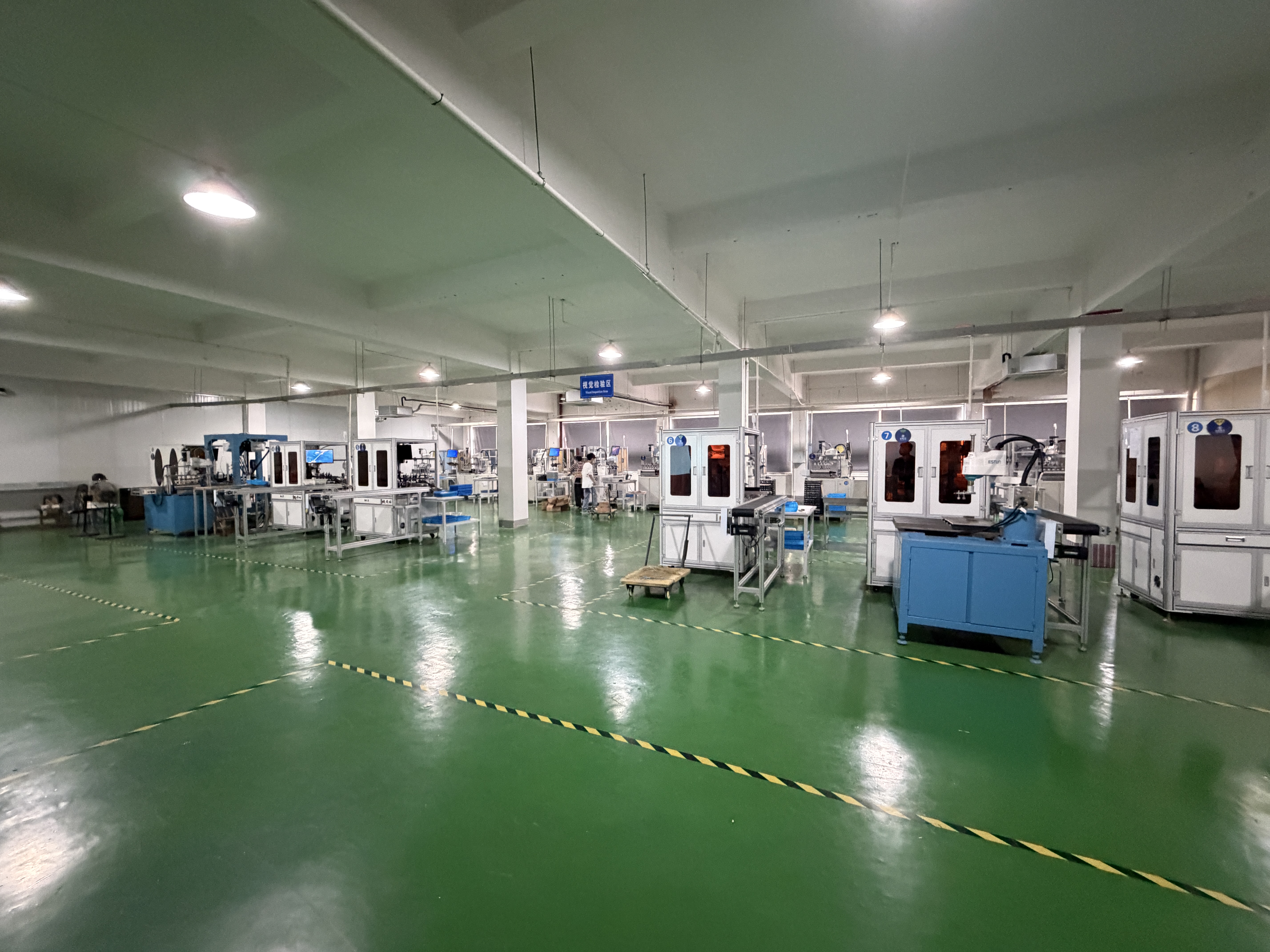
At our facility, we produce over 5 million precision blade components per year using MIM — a volume that would require a massive CNC machine shop to replicate.
When to Choose CNC Over MIM
MIM is not always the right answer. Choose CNC machining when:
- Low volume: Fewer than 2,000 pieces (mold cost cannot be amortized effectively).
- Large parts: Weight exceeds 200g or dimensions exceed 100mm in any axis.
- Aluminum required: MIM cannot process aluminum. CNC is the standard for aluminum parts.
- Ultra-tight tolerance everywhere: If every dimension needs ±0.01mm, CNC delivers this without secondary operations.
- Prototyping only: For 1-50 prototype parts, CNC is faster and requires no tooling investment.
- Simple geometry: If the part can be machined in 1-2 setups (a cylinder, a plate with holes, a simple bracket), CNC is more cost-effective because MIM's mold investment adds no value.
The Hybrid Approach: MIM + CNC
For many parts, the optimal strategy combines both processes:
- Use MIM to produce the complex near-net-shape part (saving 70-80% of material and most machining time).
- Use CNC to machine only the critical surfaces that need tighter tolerance (bearing bores, mating faces, thread tapping).
This hybrid approach delivers the cost savings of MIM (complex shape at high speed) with the precision of CNC (tight tolerance where it matters). It is how we manufacture our most demanding A5 detachable blades: MIM for the complex tooth profile and guide rail geometry, then CNC grinding for the cutting edge.
Decision Matrix: MIM vs CNC at a Glance
| Factor | MIM Advantage | CNC Advantage |
|---|---|---|
| Volume >5,000/year | ✓ | |
| Volume <2,000/year | ✓ | |
| Complex geometry (3+ CNC setups) | ✓ | |
| Simple geometry (1-2 setups) | ✓ | |
| Part weight <50g | ✓ | |
| Part weight >200g | ✓ | |
| Material: steel/stainless/titanium | ✓ | ✓ |
| Material: aluminum | ✗ | ✓ |
| Tolerance ±0.05mm or wider | ✓ | ✓ |
| Tolerance ±0.01mm everywhere | ✓ | |
| Material waste | 3% waste | 30-60% waste |