
How to Remove Rust from Clipper Blades: 5 Methods Ranked by Effectiveness
Step-by-step guide to removing rust from hair clipper blades. From surface oxidation to deep pitting — know when to clean, when to sharpen, and when to replace. Includes prevention protocol.
Rust on a clipper blade is not just a cosmetic problem — it is a functional and hygiene problem. Rust roughens the precision-ground cutting surfaces, increases friction, accelerates dulling, and creates microscopic cavities where bacteria can colonize. In professional settings, rusty blades violate health department sanitation requirements in most jurisdictions. This guide covers five methods for removing rust, how to assess whether a rusty blade is salvageable, and the prevention protocol that keeps blades rust-free permanently.
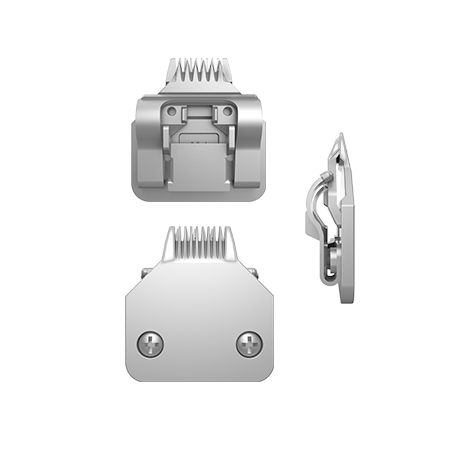
Assessing Rust Severity: Clean, Sharpen, or Replace?
Before starting any rust removal, determine the severity. This determines whether the blade is worth saving:
| Severity Level | Visual Appearance | Fingernail Test | Action |
|---|---|---|---|
| Surface oxidation | Light orange/brown discoloration | Smooth — fingernail does not catch | Clean + oil (methods below) |
| Moderate rust | Darker orange, visible texture change | Slight roughness — fingernail catches lightly | Clean + sharpen + oil |
| Deep pitting | Dark brown/black spots, cratered surface | Definite pits — fingernail drops into craters | Replace the blade |
The fingernail test is the most reliable indicator. Run your fingernail across the rusted area. If the surface feels smooth, the rust is superficial and removable. If your fingernail catches in pits, the base metal has been eroded — no amount of cleaning will restore the original surface geometry, and the blade will never cut as well as it did.
Method 1: White Vinegar Soak (Best for Surface Oxidation)
Effectiveness: 8/10 for surface rust. White vinegar (5% acetic acid) dissolves iron oxide (rust) without attacking the underlying steel significantly.
- Remove the blade from the clipper.
- Submerge the blade in undiluted white vinegar in a glass or plastic container (not metal — the vinegar will react with metal containers).
- Soak for 30–60 minutes for light surface oxidation, up to 4 hours for moderate rust.
- Remove the blade and scrub the rusted areas with an old toothbrush or brass wire brush (brass is softer than steel and will not scratch the blade surface).
- Rinse thoroughly with clean water — vinegar residue will cause new rust if left on the blade.
- Dry immediately and completely. Use a clean cloth, then blow with compressed air to reach between the teeth. Any remaining moisture will cause new rust within hours.
- Oil the blade generously — coat all surfaces, especially the areas where rust was removed.
Method 2: Baking Soda Paste (Gentle, Good for Light Rust)
Effectiveness: 6/10. Less aggressive than vinegar, better for very light surface discoloration where you want to avoid any risk of surface etching.
- Mix baking soda with water to form a thick paste (approximately 3:1 baking soda to water).
- Apply the paste to the rusted areas with a cloth or old toothbrush.
- Let sit for 15–30 minutes.
- Scrub with the toothbrush in the direction of the blade teeth (not across them).
- Rinse, dry completely, and oil immediately.
Method 3: Fine Abrasive (Whetstone or Sandpaper) — Best for Moderate Rust
Effectiveness: 9/10 for moderate rust. Physical abrasion removes rust and the damaged surface layer simultaneously, leaving clean steel ready for oiling.
- Use 800–1000 grit wet/dry sandpaper or a fine-grit (1000+) whetstone.
- Wet the abrasive surface with water or light oil.
- Lay the blade flat (cutting face down) on the abrasive surface.
- Using light, even pressure, move the blade in a figure-eight pattern, maintaining the blade flat against the surface.
- Check progress after every 10–15 strokes. Stop as soon as the rust is gone — over-lapping removes good material.
- Repeat for the cutter blade (the moving piece).
- Clean all grit residue with blade wash, dry, and oil.
This method effectively combines rust removal with lapping (re-flattening the contact face), so it can actually improve blade performance if done correctly. Professional sharpening services use this exact technique with more precise equipment.
Method 4: Commercial Rust Remover (Naval Jelly, Evapo-Rust)
Effectiveness: 9/10. Commercial rust removers are chemically formulated to dissolve rust selectively without attacking the base steel. Evapo-Rust is particularly popular because it is pH-neutral, non-toxic, and water-based.
- Submerge the blade in the rust remover per product instructions (typically 30 minutes to 12 hours depending on severity).
- Remove, scrub lightly with a nylon brush, and inspect.
- Rinse with water, dry completely, and oil.
Commercial removers are the best option for blades with moderate rust in hard-to-reach areas (between teeth, under the hinge mechanism on A5 blades) where physical abrasion cannot reach effectively.
Method 5: Blade Wash + Clipper Spray (For Prevention and Very Light Oxidation)
Effectiveness: 4/10 for existing rust, 10/10 for prevention. Blade wash (like Andis Cool Care or Oster Blade Wash) is primarily a cleaning and disinfecting solution, not a rust remover. However, the solvent action can dissolve very light surface oxidation that has not yet progressed to actual rust.
Spray the blade, run the clipper for 10–15 seconds, wipe, and oil. If the discoloration does not come off with blade wash, it is actual rust and needs one of the stronger methods above.
Method Comparison
| Method | Best For | Time | Cost | Risk to Blade |
|---|---|---|---|---|
| White vinegar | Surface oxidation | 30–240 min | ~$1 | Low (slight surface etching) |
| Baking soda paste | Very light discoloration | 15–30 min | ~$0.50 | Very low |
| Fine abrasive | Moderate rust | 5–15 min | ~$5 (sandpaper) | Medium (can remove too much material) |
| Commercial remover | Moderate rust, hard-to-reach areas | 30 min–12 hr | ~$10–$20 | Very low (selective chemistry) |
| Blade wash/spray | Very light oxidation only | 1–2 min | ~$8–$12 | None |
Rust Prevention Protocol (The Permanent Fix)
Rust removal is reactive. Prevention is cheaper, faster, and protects blade performance. Follow this protocol and you will never deal with rusty blades again:
- Oil after every use. This is the single most important prevention step. Oil creates a barrier between steel and moisture. One missed oiling after a busy day is often how rust starts.
- Dry blades before storage. After cleaning with blade wash (which is water-based), dry the blade completely — cloth wipe, then compressed air between teeth.
- Store in a dry location. Do not leave blades in a bathroom, near sinks, or in open air in humid climates. A closed drawer with a silica gel packet is ideal.
- Use blade cases or blade trays with oil-soaked pads. Professional blade storage systems include fabric pads that hold oil, keeping blades in constant contact with a protective oil film.
- Weekly inspection. Check all blade surfaces — including the back of the comb and the sides of the rails — for the first signs of discoloration. Catching surface oxidation early means a 2-minute fix instead of a 2-hour rust removal.
Does Blade Material Affect Rust Resistance?
| Material | Rust Resistance | Notes |
|---|---|---|
| Carbon steel | Low — rusts quickly without oiling | Requires diligent oiling after every use |
| Stainless steel (420) | Moderate — resists surface rust | Still rusts in prolonged humid conditions without oil |
| Stainless steel (440C MIM) | Good — higher chromium content | 96-99% density reduces pore-initiated corrosion |
| Ceramic (ZrO2) | Immune — ceramic does not rust | Only the steel comb can rust; the ceramic cutter cannot |
| TiN-coated steel | Very good — coating seals the surface | Coating only protects where it is intact; edges wear through |
SUMTHIN MIM blades use 440C stainless steel with 96–99% theoretical density, giving them inherently better corrosion resistance than stamped blades (which have more surface porosity where moisture can initiate rust). Combined with proper oiling, these blades are extremely resistant to rust — but no steel blade is immune without maintenance.
Related Guides
- How to Clean Clipper Blades — Complete cleaning and disinfection protocol.
- Clipper Blade Oil Guide — Oil types, application, and alternatives.
- Clipper Blade Steel Grades — Material comparison including corrosion resistance.
- Clipper Blade Not Cutting? — Troubleshooting guide (rust is cause #8).