
Clipper Blade Oil Guide: What It Is, How to Use It, and Best Alternatives [2026]
Complete guide to clipper blade oil — why it matters, how to apply it correctly, how often to oil, best substitutes, and maintenance tips from a blade manufacturer.
Clipper blade oil is the single cheapest thing you can do to extend blade life, reduce heat, and keep cuts clean. Yet most barbers, groomers, and home users either skip oiling entirely or do it incorrectly — and then blame the blade when performance drops. As a blade manufacturer producing over 2 million units annually, we see the damage first-hand: returned blades with scored rails, corroded teeth, and premature dulling that proper oiling would have prevented entirely.
This guide covers exactly what clipper blade oil is, how to apply it step by step, how often you need to oil, and whether common substitutes like baby oil or mineral oil actually work (spoiler: some do, some will destroy your blades).
What Is Clipper Blade Oil?
Clipper blade oil is a lightweight, low-viscosity mineral oil specifically formulated for the narrow gap between a clipper's moving cutter blade and stationary comb blade. This gap is typically just 0.05-0.10mm — about the thickness of a human hair. The oil must be thin enough to wick into this space by capillary action, yet stable enough not to evaporate or gum up.
Quality clipper oil has three jobs:
- Lubrication — reduces metal-on-metal friction between the cutter and comb. This directly lowers operating temperature and prevents microscopic scoring of the blade rails.
- Cooling — oil absorbs and distributes heat generated during cutting. An unoiled blade can reach 65°C (150°F) in under 5 minutes of continuous use; a properly oiled blade stays below 40°C (104°F).
- Corrosion prevention — the thin oil film displaces moisture and protects steel surfaces from rust and oxidation, especially critical in humid environments.
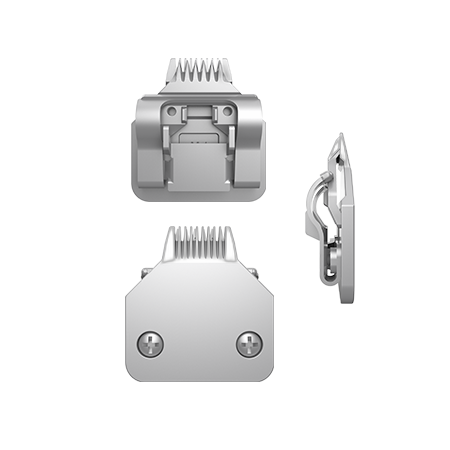
How to Oil Clipper Blades: Step-by-Step
Oiling takes less than 30 seconds. Here is the correct method:
- Turn the clipper on. The blade should be running during oiling — this helps distribute the oil across the full width of the cutting rail.
- Apply 2-3 drops across the front teeth. Hold the oil bottle at the top edge of the blade (the cutting teeth) and place one drop on each side and one in the center.
- Add 1 drop on each side rail. The side rails (also called guide rails or runners) are the metal tracks where the cutter slides back and forth. These need lubrication too — place one drop on each side.
- Let the clipper run for 10-15 seconds. This distributes the oil evenly between the cutter and comb surfaces.
- Wipe excess oil from the blade surface. Use a clean cloth or paper towel to remove any oil that could transfer to hair or fur during cutting.
Total oil per application: 4-5 drops (approximately 0.2-0.3ml). More is not better — excess oil attracts hair and debris, creating a paste that actually increases friction.
How Often Should You Oil Clipper Blades?
| Use Case | Oil Frequency | Why |
|---|---|---|
| Busy barbershop | Every 2-3 clients | High-volume continuous use generates significant heat |
| Pet groomer | Between every dog | Animal fur is coarser and often dirtier than human hair |
| Livestock / equine | Every 10-15 minutes | Thick coats, dust, and lanolin accelerate blade wear |
| Home user | Before and after each use | Prevents corrosion during storage between infrequent uses |
The universal rule: if you hear the clipper pitch change (it gets louder or higher-pitched), the blade needs oil immediately. That sound is metal dragging on metal without lubrication.
Clipper Blade Oil Substitutes: What Works and What Doesn't
We get asked constantly: "Can I use baby oil on my clipper blades?" or "Is mineral oil okay?" Here is the honest answer from a manufacturer's perspective:
| Substitute | Verdict | Notes |
|---|---|---|
| Pure mineral oil (USP grade) | OK — Good substitute | Same base as most clipper oils. Food-grade, odorless, correct viscosity. |
| Baby oil | Caution — Short term only | Mineral oil + fragrance + vitamin E. Fragrance additives can gum up over time. Rinse and re-oil with proper oil within 24 hours. |
| Sewing machine oil | OK — Good substitute | Similar viscosity and composition to clipper oil. Clear, odorless varieties work well. |
| Coconut oil | No — Avoid | Solidifies below 24°C (76°F), trapping debris. Goes rancid. Will clog blade mechanism. |
| Olive oil / cooking oils | No — Avoid | Goes rancid, becomes sticky, attracts bacteria. Will damage blades long-term. |
| WD-40 | No — Avoid | Not a lubricant — it is a solvent/water displacer. Evaporates quickly and leaves blades dry. Contains chemicals unsafe for skin contact. |
| Silicone spray | Caution — Cooling only | Good as blade coolant spray during use, but evaporates too fast to serve as ongoing lubricant. Use in addition to oil, not as replacement. |
Steel vs Ceramic Blades: Does Oiling Differ?
Yes, and this is a point most guides miss. The oiling technique differs based on your blade material:
Steel-on-steel blades (standard A5 blades, barber taper blades): Oil both the cutter and comb surfaces. Steel generates more friction and heat than ceramic, so consistent oiling is critical. Steel blades that run dry for even a few minutes can develop microscopic scoring on the cutting rail — damage that is invisible to the naked eye but creates a rougher cut. Our MIM powder metallurgy steel blades (HRC 60-62) resist scoring better than stamped blades (HRC 54-58), but oiling is still essential.
Ceramic-on-steel blades: The ceramic cutter is self-lubricating to a degree — zirconia ceramic has a naturally lower friction coefficient (0.3) compared to steel-on-steel (0.6). However, the steel comb still needs oil. Apply oil to the side rails and the steel comb teeth. Ceramic blades run 75% cooler than all-steel blades, so heat-related oiling urgency is lower — but corrosion prevention on the steel parts remains important. For a full comparison, see ceramic vs steel clipper blades.
Common Oiling Mistakes
After 20+ years of manufacturing blades and hearing customer feedback, these are the most common oiling errors we see:
- Over-oiling. Using 10+ drops creates a paste of oil and hair clippings that actually increases friction and clogs the blade mechanism. 4-5 drops is enough.
- Oiling only the teeth. The side rails are where most friction occurs — always oil these too.
- Oiling a dirty blade. Oil on top of hair debris just traps it in place. Always brush clean first, then oil. See our complete blade cleaning guide for the full routine.
- Storing blades without oil. Blades stored dry in humid conditions will develop surface rust within days. Always apply a light coat before storage.
- Using the wrong substitute. Vegetable oils, coconut oil, and WD-40 cause more damage than no oil at all.
Blade Oil and Blade Longevity: The Numbers
Proper oiling directly extends blade life. Here is what our testing data shows:
- Properly oiled SUMTHIN MIM blades (HRC 60-62): 800-1200 cuts between sharpenings
- Same blades used without oil: 300-500 cuts before noticeable dulling
- Properly oiled blades can be resharpened 4-5 times; neglected blades often can only be sharpened 1-2 times before the rail damage is too severe
- Temperature difference: oiled blade peaks at 38°C after 5 min; dry blade reaches 62°C
That means proper oiling can effectively triple your blade investment — more cuts per sharpening, more sharpenings per blade. For a complete guide to blade sharpening, see our dedicated article.