
Sintered Metal Parts: Properties, Applications & How They Are Made [2026]
Complete guide to sintered metal parts — covering the sintering process, mechanical properties, applications in automotive, medical, and electronics, and how to specify sintered metal components for your product.
Sintered metal parts are components manufactured by compacting metal powder into a desired shape and then heating it to a temperature just below the metal's melting point — a process called sintering. During sintering, metal particles bond through solid-state diffusion, creating a dense, strong component without ever melting the metal. The result is a near-net-shape part with controlled porosity, uniform microstructure, and mechanical properties approaching those of wrought metal.
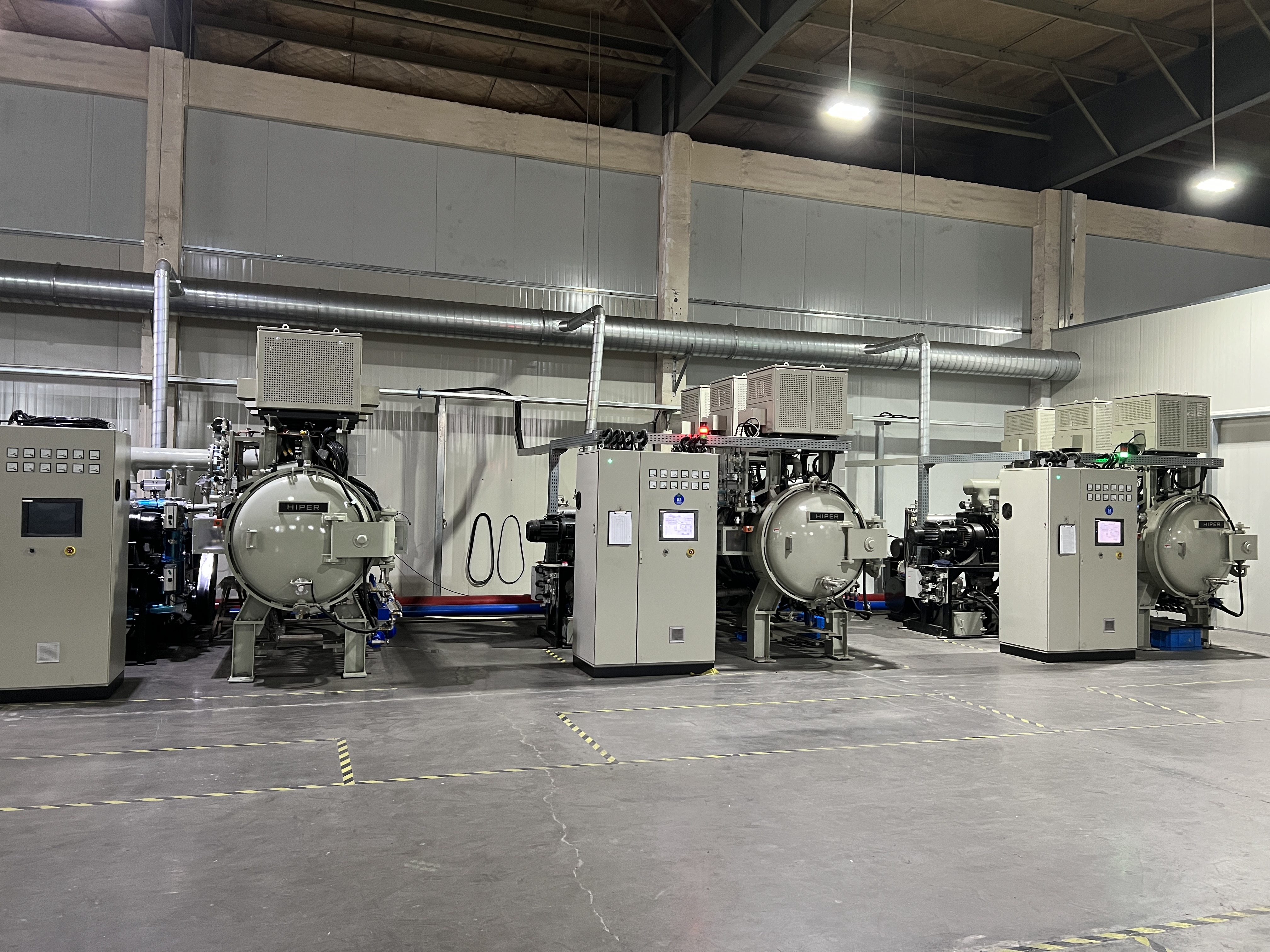
Sintering is the critical step in all powder metallurgy processes — whether conventional press-and-sinter PM or Metal Injection Molding (MIM). At SUMTHIN, our sintering furnaces run 24/7, processing over 60,000 parts per day across our clipper blade and custom MIM component lines. This guide explains everything you need to know about sintered metal parts — how they are made, what properties they achieve, and where they are used.
How the Sintering Process Works
Sintering occurs in three distinct stages, each producing specific microstructural changes:
Stage 1: Initial Stage (Neck Formation)
As temperature rises, contact points between adjacent powder particles begin to bond through surface diffusion. Small "necks" form at particle contact points, connecting individual particles into a continuous network. Shrinkage at this stage is minimal (1-3%). This occurs at approximately 60-70% of the melting temperature.
Stage 2: Intermediate Stage (Pore Rounding and Shrinkage)
Necks grow larger, grain boundaries develop, and interconnected porosity begins to close. This is where most densification occurs — the part may shrink 10-20% linearly (for MIM parts). Pores change from irregularly shaped voids to rounded, isolated pores. Density increases from 60-70% to 90-95% of theoretical.
Stage 3: Final Stage (Pore Elimination)
Remaining isolated pores shrink as atoms diffuse toward pore surfaces. Achieving density above 95-96% requires extended sintering times and higher temperatures. MIM parts typically reach 96-99% theoretical density; conventional PM parts reach 85-92%. Eliminating the last few percent of porosity is the most time-consuming and energy-intensive stage.
Types of Sintering Atmospheres
The atmosphere inside the sintering furnace is critical — it prevents oxidation, facilitates binder removal, and can influence final material properties:
| Atmosphere | Typical Use | Advantages | Cost |
|---|---|---|---|
| Hydrogen (H₂) | Stainless steel, iron alloys | Strong reducing agent, removes oxides | Medium |
| Nitrogen/Hydrogen (N₂/H₂) | Low alloy steel, iron-copper | Economical, good oxide reduction | Low |
| Vacuum | Stainless steel, titanium, superalloys | No contamination, highest purity | High |
| Vacuum + Argon backfill | 17-4PH, titanium alloys | Prevents evaporation of volatile elements | High |
| Dissociated ammonia | Copper, bronze, brass | Good for non-ferrous metals | Low |
Mechanical Properties of Sintered Metal Parts
Sintered parts achieve mechanical properties that depend on three factors: the base material, the final density, and any post-sintering heat treatment. Here is a comparison of common sintered materials:
| Material | Process | Density (% TD) | Tensile Strength | Hardness | Elongation |
|---|---|---|---|---|---|
| Fe-0.8C (sinter hardened) | PM | 88-90% | 550-700 MPa | HRC 25-35 | 1-2% |
| Fe-2Ni-0.5C | PM | 89-92% | 600-850 MPa | HRC 30-45 | 1-3% |
| 316L Stainless (MIM) | MIM | 96-98% | 500-550 MPa | HRB 67 | 40-50% |
| 17-4PH (H900 condition) | MIM | 96-98% | 1,100-1,300 MPa | HRC 33-44 | 5-8% |
| 440C (quench + temper) | MIM | 96-99% | 750-900 MPa | HRC 58-62 | 1-2% |
| Ti-6Al-4V | MIM | 96-98% | 900-1,000 MPa | HRC 32-36 | 10-15% |
| Copper (infiltrated iron) | PM | 92-96% | 450-600 MPa | HRB 70-90 | 3-8% |
Key observation: MIM sintered parts achieve properties very close to wrought (forged or rolled) metal because they reach 96-99% theoretical density. Conventional press-and-sinter PM parts have lower ductility (elongation) due to residual porosity, which acts as stress concentrators under tensile loading. For fatigue-critical applications, MIM or high-density PM (with copper infiltration or double-pressing) is preferred.
Controlled Porosity: When Pores Are a Feature, Not a Defect
Unlike most manufacturing processes that aim for 100% density, powder metallurgy can intentionally produce parts with controlled porosity — and this is sometimes the desired outcome:
- Self-lubricating bearings: Sintered bronze or iron bearings with 15-25% porosity are impregnated with oil. The pores act as micro-reservoirs, continuously supplying lubricant to the bearing surface. These self-lubricating bearings eliminate the need for external lubrication systems and are used in millions of small motors, fans, and appliances worldwide.
- Filters and flow restrictors: Sintered metal filters with 30-50% porosity are used for gas and liquid filtration in chemical processing, fuel systems, and pneumatic equipment. Pore size is controlled by powder particle size and sintering parameters.
- Sound dampening: Porous sintered panels absorb sound energy and are used as acoustic dampeners in automotive exhausts and industrial equipment.
- Biomedical implants: Porous titanium implants with 20-40% porosity promote bone ingrowth (osseointegration), creating a stronger bond between the implant and surrounding bone tissue.
Applications of Sintered Metal Parts by Industry
Automotive (60% of All Sintered Parts)
The automotive industry is the largest consumer of sintered metal parts. A modern passenger car contains 8-12 kg of powder metallurgy components:
- Engine: Connecting rods, valve seat inserts, variable valve timing (VVT) sprockets, oil pump gears
- Transmission: Synchronizer hubs, planetary carriers, shift fork pads, clutch plates
- Chassis: ABS sensor rings, shock absorber pistons, bearing bushings
- EV-specific: Motor lamination stacks, gear reduction components, battery cooling plate connectors
For a deeper dive into automotive applications, see our dedicated guide: Powder Metallurgy in the Automotive Industry: 30+ Applications.
Medical Devices
- Orthodontic brackets and bands (MIM 316L/17-4PH) — one of the highest-volume MIM applications
- Surgical instrument jaws and handles (MIM 17-4PH)
- Endoscopic biopsy forceps (MIM 316L, miniature parts at 2-3mm scale)
- Porous titanium implant surfaces for osseointegration
Electronics and Consumer Products
- Smartphone SIM card trays (MIM 316L — billions produced annually)
- Camera lens module brackets (MIM 17-4PH for rigidity)
- Watch cases and crowns (MIM 316L or titanium)
- Soft magnetic components for inductors and transformers (sintered iron-silicon)
Tools, Hardware, and Industrial
- Lock cylinder components (MIM low alloy steel)
- Power tool gears (sintered Fe-2Ni, carburized)
- Self-lubricating bushings and bearings (sintered bronze, 20% porosity)
- Cutting tool inserts (sintered tungsten carbide)
For a detailed directory of 50+ specific applications, see our MIM applications guide.
How to Specify Sintered Metal Parts for Your Product
When designing a sintered metal part or requesting a quote from a manufacturer, provide the following specifications:
- 3D CAD model or 2D drawing with dimensions, tolerances on critical features, and GD&T callouts
- Material specification — alloy grade (e.g., MPIF FC-0208 for conventional PM, ASTM A276 316L for MIM) or functional requirements (strength, hardness, corrosion resistance) if unsure about material
- Density requirement — specify minimum density if part must meet specific mechanical thresholds (e.g., "≥7.0 g/cm³" for iron-based PM, or "≥96% TD" for MIM)
- Surface finish — Ra value for critical surfaces, or specify "as-sintered," "tumbled," "polished," etc.
- Annual volume and batch size — this determines whether PM, MIM, or CNC machining is the most economical process
- Testing requirements — dimensional report, material certifications, hardness testing, destructive testing frequency
- Industry standards — medical (ISO 13485), automotive (IATF 16949), or general (ISO 9001)
Sintered Parts vs Wrought Metal: Can You Tell the Difference?
For MIM sintered parts at 96-99% density — visually and mechanically, there is virtually no difference from wrought metal. The part looks, feels, and performs the same. The only detectable difference is under a metallurgical microscope, where MIM parts show a small percentage of fine, rounded pores distributed uniformly throughout the cross-section.
For conventional PM parts at 85-92% density, the differences are more apparent: slightly lower weight (due to porosity), matte surface texture, and reduced ductility. These parts perform excellently in compression-loaded applications (gears, bearings, structural supports) but are not recommended for applications with high tensile stress or fatigue loading without density enhancement (infiltration, HIP, or double-pressing).