
Titanium Coated Clipper Blades: Are They Worth It? (Factory Analysis)
What are titanium coated clipper blades, how are they made, and do they actually last longer? A blade manufacturer explains the science behind TiN, DLC, and titanium nitride coatings with real performance data.
"Titanium coated" is one of the most used — and most misunderstood — marketing terms in the clipper blade industry. Buyers see "titanium" and assume the blade is made of titanium. It is not. A titanium-coated blade is a standard steel blade with a very thin coating (typically 1–5 micrometers) of titanium nitride (TiN) or a similar compound applied to the surface. This guide explains exactly what these coatings are, what they actually do, what they cannot do, and whether the premium is justified — from the perspective of a manufacturer who produces both coated and uncoated blades.
What Is a Titanium Coating?
In clipper blade manufacturing, "titanium coating" typically refers to one of three coating technologies:
| Coating Type | Chemical Name | Thickness | Surface Hardness | Appearance |
|---|---|---|---|---|
| TiN | Titanium Nitride | 1–3 micrometers | HV 2,300 | Gold/yellow |
| TiCN | Titanium Carbonitride | 1–4 micrometers | HV 3,000 | Dark grey/violet |
| DLC | Diamond-Like Carbon | 0.5–3 micrometers | HV 3,000–5,000 | Black |
All three are applied through PVD (Physical Vapor Deposition) — the blade is placed in a vacuum chamber and bombarded with ionized titanium or carbon atoms that bond to the steel surface at the molecular level. The process temperature (200–500°C) is low enough that it does not affect the base steel's hardness or temper.
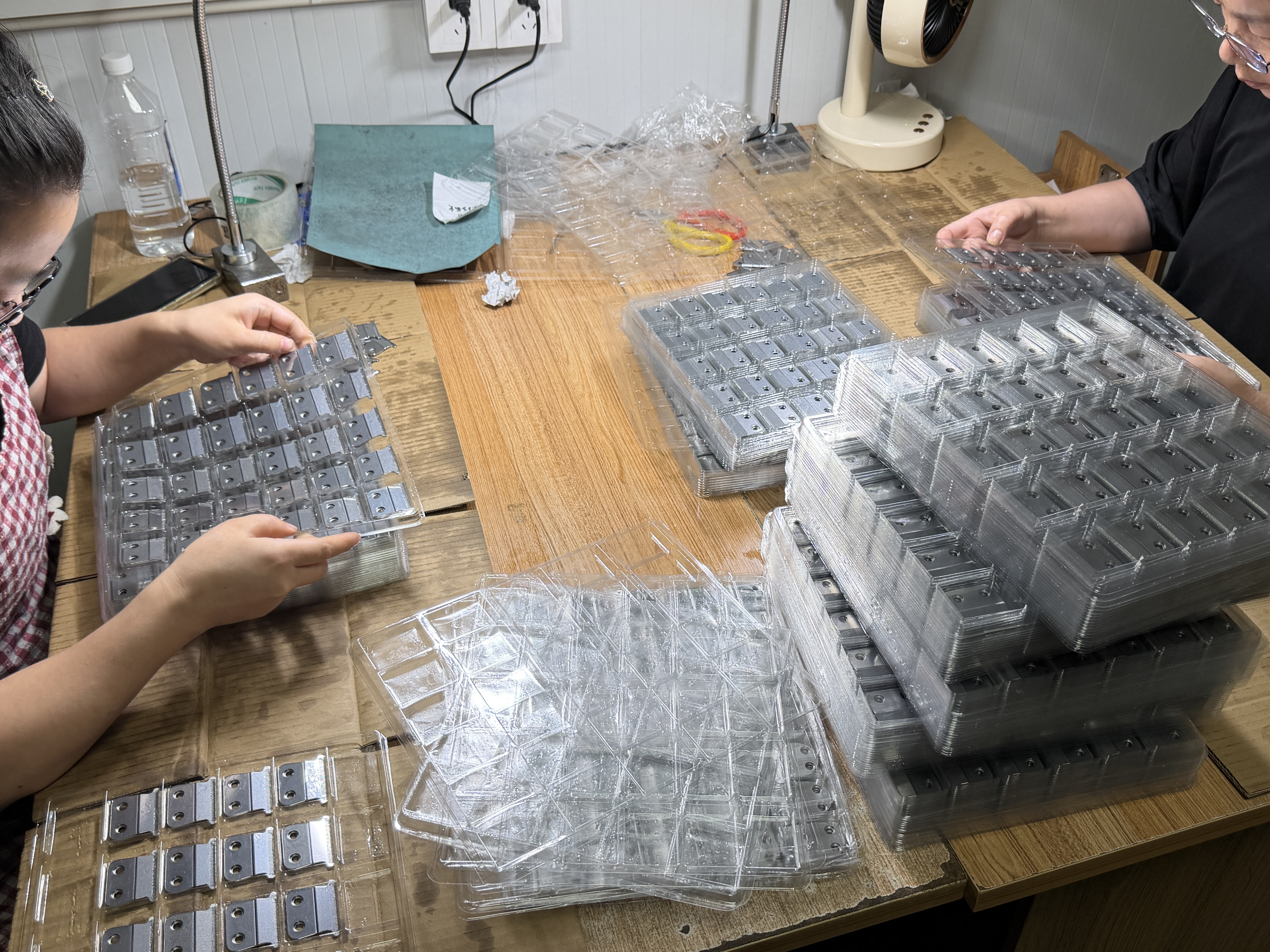
What Titanium Coatings Actually Do (With Data)
1. Reduce Surface Friction (Verified)
TiN coatings reduce the coefficient of friction between the cutter and comb by 20–40% compared to uncoated polished steel. This has two practical benefits:
- Lower operating temperature: In our factory tests, TiN-coated blades running at 7,200 SPM reached 45°C after 30 minutes of continuous cutting, versus 58°C for identical uncoated blades. That 13°C difference is noticeable and meaningful for client comfort.
- Smoother hair feeding: Hair slides across the coated surface with less resistance, reducing pull and improving the feel of the cut. This is most noticeable on fine, soft hair that tends to stick to bare metal.
2. Increase Surface Hardness (Verified, With Caveats)
TiN surface hardness (HV 2,300) is roughly 4x harder than the base HRC 60 steel underneath. However:
- The coating is only 1–3 micrometers thick — thinner than a human hair (70 micrometers).
- The cutting edge wears through this thin layer after the first professional sharpening.
- Once the coating is removed at the edge, the blade cuts on the underlying steel, not the coating.
This means: the coating helps the blade slide (friction reduction), but it does not meaningfully extend edge sharpness life because the actual cutting happens at the very tip of the tooth where the coating wears through first.
3. Corrosion Resistance (Verified)
TiN and DLC coatings create a chemical barrier between the steel and the environment. Coated blades resist surface oxidation better than uncoated blades, especially in humid barbershop/grooming environments. This is a genuine benefit — but proper oiling after each use provides the same corrosion protection at zero additional cost.
4. Aesthetic Differentiation (Marketing Benefit)
Gold (TiN), rose gold (ZrN), black (DLC), and rainbow (multi-layer) coatings allow brands to visually differentiate their blades. For OEM brands, coating color is an easy way to create a premium product tier without changing the base blade design. This is a legitimate branding strategy, but the buyer should not confuse color with performance.
What Titanium Coatings Do NOT Do
- Do not make the blade "titanium." The blade is steel. The coating contains titanium compounds but the blade itself is 99.9% steel by mass.
- Do not make a dull blade sharp. If the base blade is made from HRC 50 steel, the coating does not raise it to HRC 60 performance. The edge still dulls at the rate determined by the base steel, not the coating.
- Do not survive sharpening. Professional sharpening removes 5–20 micrometers of material from the cutting face. The 1–3 micrometer coating is completely gone after the first sharpening. All subsequent performance is base-steel-only.
- Do not replace oiling. Despite lower friction, coated blades still need regular oiling. The side rails are still steel-on-steel contact points, and the coating does not lubricate — it just has a lower friction coefficient.
Coated vs Uncoated: Honest Performance Comparison
| Factor | Uncoated MIM (HRC 60) | TiN Coated MIM (HRC 60) | Difference |
|---|---|---|---|
| Initial sharpness | Identical | Identical | None — edge geometry is the same |
| Operating temperature (30 min) | ~58°C | ~45°C | 13°C cooler (meaningful) |
| Edge life (first use to first sharpening) | 800–1,200 cuts | 850–1,300 cuts | ~5–10% longer (marginal) |
| Edge life after sharpening | 800–1,200 cuts | 800–1,200 cuts | None — coating is gone |
| Corrosion resistance | Good (with oiling) | Better | Moderate improvement |
| Hair feeding smoothness | Good | Better (on fine hair) | Noticeable on fine/soft hair |
| Price premium | Baseline | +15–30% | $2–$5 per blade typical |
When Titanium Coating Is Worth It
- You need lower blade temperature for client comfort or extended sessions — the 10–15°C reduction is real and significant.
- You rarely sharpen — if you replace blades instead of sharpening, you keep the coating benefit for the full blade life.
- You are building an OEM brand and need visual differentiation — coating color is an effective product-tier strategy with genuine (if modest) performance backing.
- You work in a humid environment without consistent oiling habits — the corrosion barrier provides extra insurance.
When It Is NOT Worth It
- You sharpen regularly — the coating is removed on the first sharpening, so you only benefit for the first cycle.
- You want longer edge life — invest in higher base-steel hardness (HRC 60+ MIM) instead. The base material determines 95% of edge life.
- The coated blade uses cheap base steel — a TiN-coated HRC 50 blade is worse than an uncoated HRC 60 blade. Always check the base steel spec, not just the coating name.
OEM Coating Options at SUMTHIN
For OEM buyers developing their own blade brands, SUMTHIN offers all three major coating options on our MIM blade platform:
- TiN (gold) — Most popular OEM option. Recognizable premium aesthetic, proven friction reduction.
- DLC (black) — Premium tier. Highest hardness and friction reduction. Preferred by brands targeting the professional barber market.
- Custom PVD colors — Multi-layer coatings for rose gold, rainbow, gunmetal, and other brand-specific colors. MOQ typically 1,000 pieces for custom colors.
All coatings are applied to our standard MIM 440C base (HRC 60–62), ensuring the performance foundation is solid before any surface treatment. See our OEM sourcing guide for the full specification sheet.
Related Guides
- Clipper Blade Steel Grades — 420, 440A, 440C, carbon steel, and ceramic compared.
- How Clipper Blades Are Made — MIM manufacturing process explained.
- Ceramic vs Steel Clipper Blades — Material comparison with lab data.
- OEM Clipper Blade Sourcing — Complete buyer's guide for China sourcing.