
How to Source OEM Clipper Blades from China: Buyer's Complete Guide [2026]
Step-by-step guide to sourcing OEM clipper blades from Chinese manufacturers. Covers finding reliable factories, MOQ, pricing, quality control, materials, certifications, and shipping.
China produces over 80% of the world's clipper blades. Whether you are launching a new grooming brand, sourcing replacement blades for an existing product line, or looking to switch from an expensive domestic supplier, understanding how to navigate the Chinese clipper blade manufacturing landscape is essential.
This guide walks you through the complete OEM clipper blade sourcing process — from finding the right factory to receiving your first shipment — based on our experience as a manufacturer that has supplied OEM blades to professional grooming brands in the US, Europe, and Asia for over 20 years.
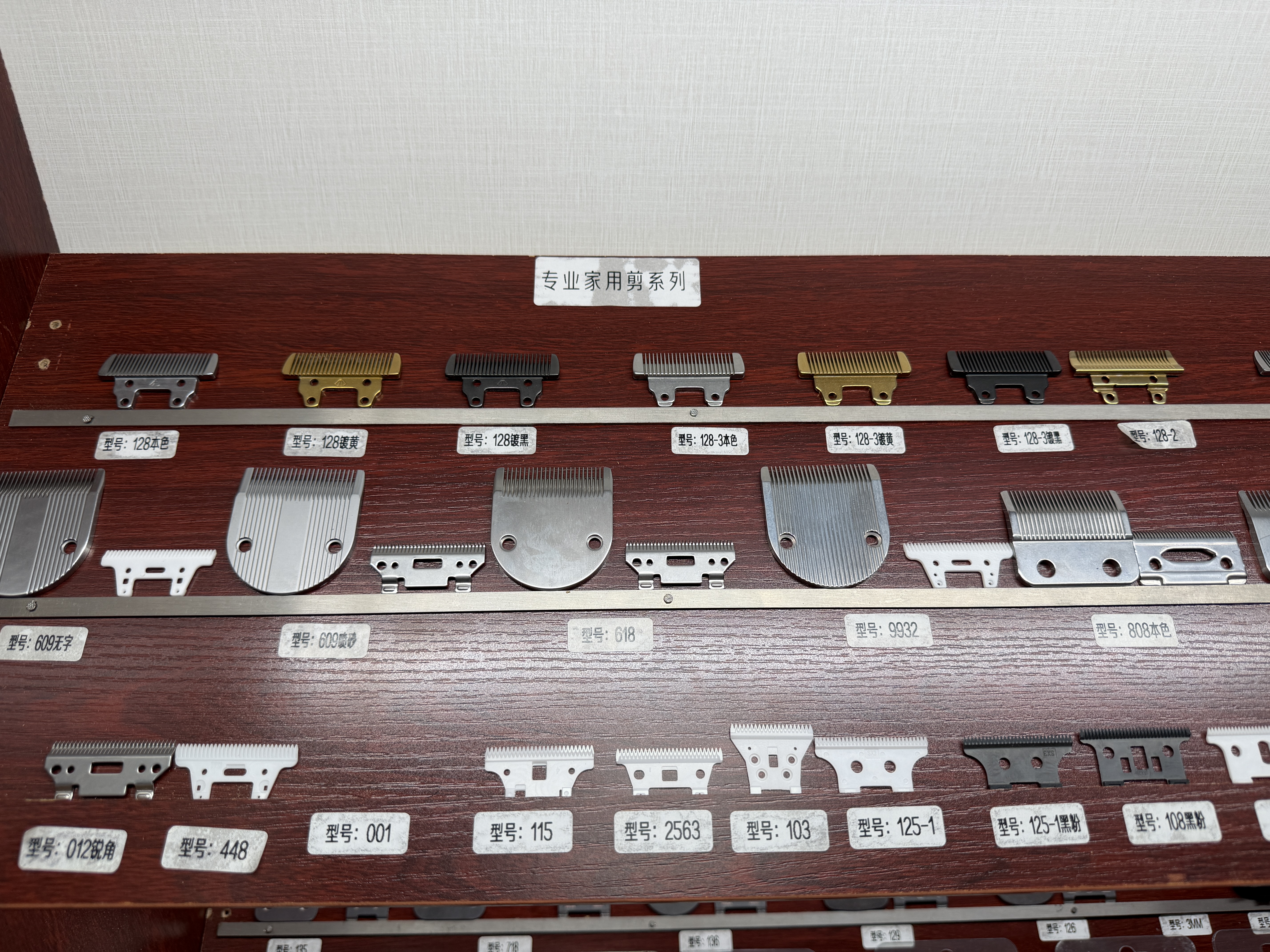
Step 1: Define Your Blade Requirements
Before contacting any manufacturer, document exactly what you need. Factories respond faster and more accurately when you provide clear specifications:
- Blade type: A5 detachable blades (pet grooming), taper blades (barber clippers), T-blades or U-blades (trimmers), or specialty blades (sheep shearing, nose trimmer)? See our full product catalog for the range of blade types available.
- Compatibility: Which clipper brands and models must your blades fit? Wahl, Andis, Oster, Moser, or a proprietary design? Check our compatibility database for cross-references.
- Material: Hardened stainless steel (standard), zirconia ceramic (premium, stays sharp 5x longer), or MIM powder metallurgy (complex geometries).
- Branding: Do you need your logo laser-engraved on the blade? Custom packaging? Retail-ready blister packs?
- Volume: Your expected annual order quantity determines pricing tier and which factories will accept your business.
Step 2: Factory vs Trading Company — Know the Difference
This is the single most important decision in your sourcing process. Many "manufacturers" on Alibaba, Made-in-China, and Global Sources are actually trading companies that place orders with factories on your behalf — adding 15-30% markup and reducing your quality control visibility.
How to identify a real factory:
- They have their own production equipment (injection molding, CNC grinding, heat treatment furnaces, assembly lines).
- They can show you video or photos of their production floor with blades being manufactured.
- They invite factory visits and have a physical address in a manufacturing zone (not an office building in a city center).
- They discuss technical details like blade hardness (HRC values), steel grades (440C, 420J2), and manufacturing processes (stamping vs MIM).
- They hold ISO certifications under their own company name.
Red flags for trading companies:
- Vague answers about manufacturing process or materials.
- Can offer "any product in any industry" (real blade factories specialize).
- Office address in a commercial district with no factory photos.
- Unusually fast sample turnaround (they have stock from multiple factories, not their own production).
Step 3: Understand Pricing and MOQ
Clipper blade pricing from Chinese OEM manufacturers follows a tiered structure. Here are realistic ranges for 2026:
| Blade Type | Typical MOQ | FOB Price Range | Notes |
|---|---|---|---|
| A5 Detachable (steel) | 500 pcs/SKU | $2.50-$5.00 | Price varies by blade size and finish |
| A5 Detachable (ceramic) | 500 pcs/SKU | $4.00-$8.00 | Ceramic moving blade + steel fixed blade |
| T-blade / U-blade | 1,000 pcs/SKU | $1.50-$4.00 | Includes blade + bracket assembly |
| Standard taper blade | 1,000 pcs/SKU | $2.00-$5.00 | Fixed + moving blade set |
| Custom mold blade (OEM) | 3,000-5,000 pcs | Varies | Add $5K-$25K tooling cost |
Prices are FOB China port (typically Ningbo or Shanghai). Shipping adds $0.10-$0.30 per piece by sea freight for standard container quantities.
For our specific pricing and flexible MOQ programs for Amazon sellers and startups, contact us directly.
Step 4: Evaluate Samples Before Committing
Never place a production order without evaluating physical samples first. Here is what to test:
- Fit test: Does the blade snap onto your target clipper model securely? Check tension, alignment, and guide rail fit. Test on at least 3 clipper units.
- Cut test: Install the blade on a working clipper and cut hair or fiber. Evaluate cutting smoothness, noise level, and heat buildup over a 30-minute continuous use session.
- Hardness test: Request the factory's hardness test report (Rockwell HRC). For professional blades, expect HRC 58-62. Below HRC 55 indicates insufficient heat treatment and the blade will dull quickly.
- Edge inspection: Use a loupe or microscope to inspect the cutting edge at 10-20x magnification. Look for consistent tooth spacing, burr-free edges, and even grinding.
- Corrosion test: Place a sample in a humid environment or salt spray chamber for 24-48 hours. Good stainless steel blades should show zero rust spots.
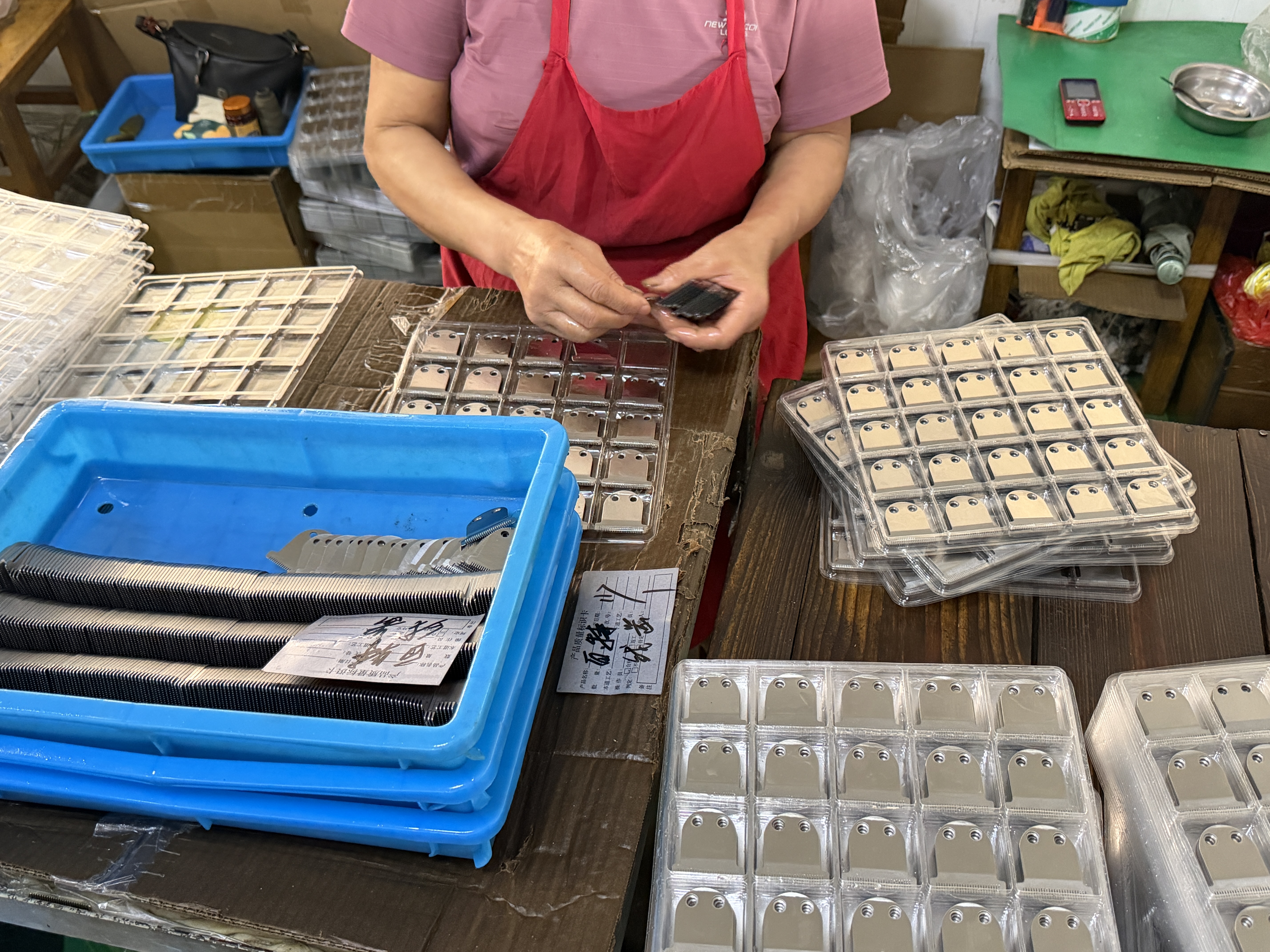
Step 5: Quality Control During Production
Once you approve samples and place a production order, quality control does not stop. Establish these QC checkpoints with your manufacturer:
- Incoming material inspection: Verify steel grade, hardness of raw stock, and dimensional accuracy of stampings or MIM blanks.
- In-process checks: Grinding angle consistency, heat treatment temperature logs, and assembly tension testing at regular intervals during production.
- Final inspection: AQL sampling (recommended AQL 1.0 for critical defects, AQL 2.5 for minor) before packing. Inspect for: blade sharpness, dimensional accuracy, surface finish, packaging correctness.
- Pre-shipment inspection: Either visit the factory yourself, hire a third-party inspection service (SGS, Bureau Veritas, TÜV), or request the factory's internal QC report with photos.
At SUMTHIN, we perform in-line quality checks at every production stage and provide batch test reports as standard. Our SGS audit history and ISO 9001 certification ensure consistent quality across orders.
Step 6: Branding and Packaging Options
Most Chinese blade manufacturers offer full branding services. Common options include:
- Laser marking: Your logo and text engraved directly on the blade surface. Permanent, clean, professional. This is the most popular branding method.
- DLC coating colors: Diamond-Like Carbon nano coating in black, gold, rose gold, blue, or rainbow. Adds a premium look while increasing blade hardness and reducing friction. See our OEM coating options.
- Blister pack packaging: Individual blade in clear plastic blister with custom-printed card insert. Retail-ready for store shelves or Amazon FBA.
- Color box packaging: Custom-printed box for premium positioning or gift sets.
- Bulk packaging: Simple OPP bags or bulk carton for distributor resale.
Step 7: Shipping and Import Logistics
Standard logistics from a Chinese blade factory to the US or Europe:
- Sea freight: 18-25 days to US West Coast, 30-35 days to US East Coast, 25-30 days to EU ports. Cost: approximately $1,500-$3,000 per 20ft container (enough for 100,000+ blades).
- Air express: 5-7 days worldwide via DHL/FedEx/UPS. Cost: approximately $6-10/kg. Ideal for samples or urgent orders under 500kg.
- HS code: Blades for electric hair clippers fall under HS 8510.90 (US HTSUS 8510.90.10, Free general rate) — not 8214.90. China-origin blades also pay Section 301 tariffs in the US; see our clipper blade HS code and import duty guide for the full 2026 landed-cost breakdown.
- Amazon FBA direct: We can ship directly to Amazon FBA warehouses with proper labeling, eliminating your need for a domestic warehouse.