
Private Label Clippers in the EU: GPSR, Responsible Person & Nickel Limits | SUMTHIN
EU GPSR 2023/988 since 13 Dec 2024: Responsible Person, 10-year technical file, batch code, 0.5 ug/cm2 nickel limit. Costs and factory checklist. Get a quote.
Quick answer: If you sell private-label clipper blades, trimmers or grooming tools to consumers in the EU, Regulation (EU) 2023/988 — the General Product Safety Regulation, or GPSR — has applied since 13 December 2024. It replaced the old General Product Safety Directive and it added three obligations that catch most new brands by surprise: you must appoint an EU-established Responsible Person whose name and address appear on the product, you must hold a written risk assessment and technical file for 10 years, and every unit needs a type or batch identifier. Separately, because clipper blades sit against skin, REACH Annex XVII entry 27 caps nickel release at 0.5 micrograms per square centimetre per week, tested to EN 1811. None of this requires a CE mark for a manual blade — but all of it is enforceable, and marketplaces now check.
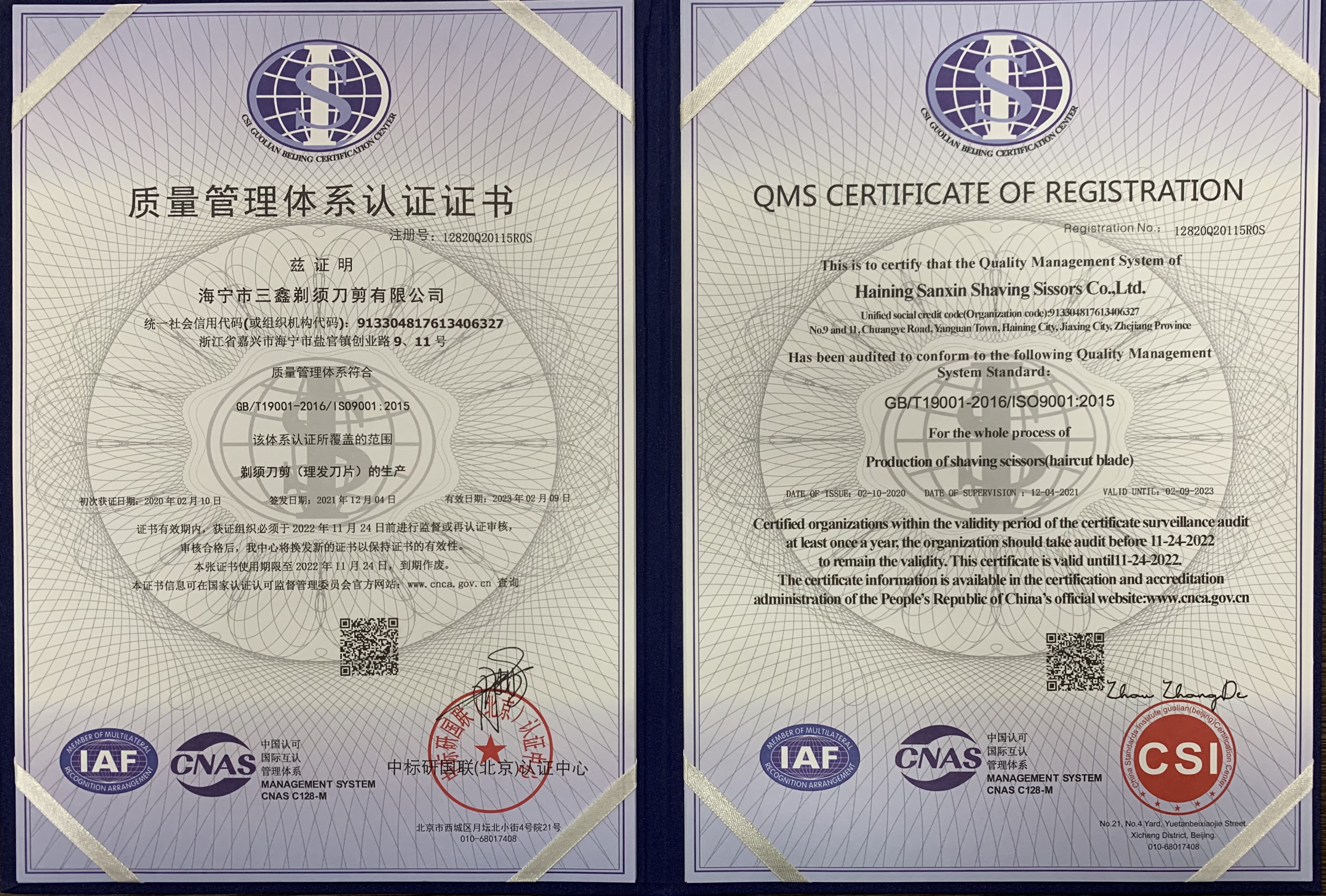
We have manufactured clipper and trimmer blades in Haining, Zhejiang since 2004 and we supply private-label and OEM customers in the EU, UK and North America. This is the practical division of labour: what the factory supplies, what only you can do, and what it costs. It is written from a manufacturer perspective and is practical guidance, not legal advice — confirm the detail with your Responsible Person or a compliance consultant before you ship.
What Changed on 13 December 2024
The GPSR replaced Directive 2001/95/EC. The old directive was implemented separately by each member state; the new instrument is a regulation, so it applies directly and identically in all 27 countries. Three shifts matter commercially.
| Area | Before (GPSD 2001/95/EC) | Now (GPSR 2023/988) |
|---|---|---|
| EU point of contact | Not generally required for non-harmonised goods | Mandatory EU-established Responsible Person, named on the product |
| Documentation | Loosely defined | Written risk analysis plus technical file, retained 10 years |
| Traceability | Good practice | Type, batch or serial identifier required on each unit |
| Importer duties | Largely passive | Must verify the manufacturer did the above, and add their own details |
| Online marketplaces | Barely addressed | Listings must show the Responsible Person and safety information |
The last row is why most brands discover GPSR the hard way. Marketplaces enforce it at the listing level — a missing Responsible Person field takes a product offline, regardless of whether an authority has ever looked at it.
Which Rules Apply to Which Product
The single most useful thing to establish early is whether your product is harmonised (covered by specific EU legislation with a CE mark) or non-harmonised (covered by GPSR as the safety net). Grooming ranges usually contain both, which is why brands get confused.
| Product | Primary EU regime | CE mark? | Also applies |
|---|---|---|---|
| Replacement blade set, A5 detachable | GPSR | No | REACH nickel release |
| Guide combs, guards, manual accessories | GPSR | No | REACH if skin contact is prolonged |
| Scissors, thinning shears, razors | GPSR | No | REACH; sharp-edge warnings |
| Mains-powered clipper | Low Voltage and EMC Directives | Yes | RoHS, WEEE, REACH |
| Cordless clipper with lithium battery | EMC, plus RED if it has wireless | Yes | RoHS, WEEE, EU Batteries Regulation, UN 38.3 for transport |
Note the asymmetry that catches out blade-only brands: a replacement blade needs no CE mark at all, which brands often read as "no obligations." It is the opposite. Precisely because no harmonised directive covers it, GPSR applies in full, including the Responsible Person and the technical file.
The EU Responsible Person: the Clause That Stops Shipments
A non-EU manufacturer whose consumer products are sold in the EU must have a Responsible Person established in the EU. This applies whether you sell through a distributor, an importer, or directly through an online marketplace, and the requirement is permanent — there is no sunset or review date attached to it.
The Responsible Person must:
- Verify that the required technical documentation and instructions exist.
- Keep the technical documentation available to market surveillance authorities for 10 years.
- Cooperate with authorities and take corrective action if a product is found unsafe.
- Appear by name, postal address and electronic contact on the product, its packaging, or an accompanying document — and on the online listing.
Who can be your Responsible Person? In order of how we see customers actually solve it:
| Option | Typical annual cost | Trade-off |
|---|---|---|
| Your EU importer or main distributor | Usually free, negotiated into the supply agreement | Ties you to that distributor. If you switch, you re-label every unit. |
| Your own EU entity or branch | Cost of the entity | Full control, no dependency |
| Commercial Responsible Person service | Roughly EUR 300-1,500 per year per brand, varies widely | Fast, neutral, and portable across distributors |
Our advice to private-label customers launching in the EU: do not let your first distributor be your Responsible Person unless you are certain about the relationship. Re-printing packaging across a full blade range because you changed partners is a genuinely expensive mistake, and it is entirely avoidable.
The Technical File: What Goes In, and Who Writes Each Part
The technical documentation must be kept for 10 years from the date the product is placed on the market and held at the disposal of market surveillance authorities. For a clipper blade it is a short document — but it has to exist before the first unit ships, not after a complaint.
| File element | What it contains for a blade | Who produces it |
|---|---|---|
| General product description | Model, sizes, photographs, intended use, intended user | Factory supplies, brand edits |
| Risk analysis | Cut and laceration, skin contact allergy, pinch at the cutter, thermal risk, small parts if sold for home use | Brand or consultant. This is the part a factory cannot sign for you. |
| Material and chemical evidence | Mill certificates, EN 1811 nickel release report, RoHS or REACH declarations | Factory supplies |
| Standards referenced | Any standards used to assess safety, plus the reasoning where no harmonised standard exists | Shared |
| Test reports | Sharpness and burr checks, corrosion testing, mechanical retention of the cutter | Factory supplies |
| Labels and instructions | Final artwork, warnings, care instructions in each required language | Brand writes, factory prints |
| Traceability record | Batch coding scheme and the production records that map codes to lots | Factory supplies |
Note the one amber row. The risk assessment is the brand owner obligation. A factory can hand you every test report in the world and it does not substitute for a written analysis of the hazards of your product, sold to your stated user, with your instructions. Suppliers who claim to provide "full GPSR compliance" are, at best, providing the evidence that goes into your file.
Labelling: What Must Physically Appear
GPSR labelling is unglamorous and it is where enforcement actually bites. The requirements break into three groups.
Identification of the product. A type, batch or serial number, or another clear identifier, on the product itself. On a clipper blade there is very little flat real estate, so in practice the batch code goes on the blister card or box, with the model marking laser-etched on the blade. We keep laser marking away from the wet crevice areas for the corrosion reasons set out in our blade corrosion guide.
Identification of the economic operators. The manufacturer name, postal address and an electronic contact point. Where the manufacturer is outside the EU, the Responsible Person details as well. The importer must also add their own name, address and electronic contact — on the product, or where that is not possible, on the packaging or an accompanying document.
Warnings and instructions. Safety information must be in a language easily understood by consumers in the member state where the product is sold, as determined by that state. This is the clause that surprises brands who assume English is sufficient. A pan-EU launch realistically means a multi-language insert or a well-designed pictogram set plus a QR code to language-specific instructions.
| Element | On the blade | On the box or blister | In the insert | On the online listing |
|---|---|---|---|---|
| Model and size marking | Yes | Yes | Optional | Yes |
| Batch or serial identifier | If space allows | Yes | Optional | No |
| Manufacturer name and address | Rarely fits | Yes | Yes | Yes |
| EU Responsible Person | No | Yes | Yes | Yes |
| Importer details | No | Yes | Yes | Recommended |
| Warnings in local language | No | Key warnings | Full text | Yes |
Skin-Contact Chemistry: Nickel, REACH and RoHS
A clipper blade rests against skin for the duration of a haircut and the guide comb sits against it continuously. That puts grooming tools into the same conversation as watch backs, jewellery and spectacle frames.
Nickel release. REACH Annex XVII entry 27 limits nickel release from articles intended to come into direct and prolonged contact with skin to 0.5 micrograms per square centimetre per week. The reference test method is EN 1811, which immerses the article in artificial sweat for one week and measures released nickel by atomic absorption or ICP-MS. A stricter limit of 0.2 micrograms per square centimetre per week applies to post assemblies inserted into pierced body parts, which is not relevant to clippers but explains why you will see two numbers quoted. The standard was updated as EN 1811:2023, so make sure any report you are handed cites the current version.
In practice, martensitic stainless blade steels are low-nickel by composition — 420, 440A and 440C are chromium-carbon grades, not chromium-nickel grades like 304. That means blades usually pass comfortably. The components to watch are the non-blade parts of the set: plated springs, plated screws, decorative trim on a premium handle, and any nickel-plated finish chosen for appearance. We have seen ranges pass on the blade and fail on a plated spring clip.
RoHS. Directive 2011/65/EU restricts lead, mercury, cadmium, hexavalent chromium and certain flame retardants and phthalates in electrical and electronic equipment. A manual blade is not EEE, so RoHS does not apply to it directly — but if you sell the blade as part of a clipper kit, the kit does fall in scope, and your customers and marketplaces will often ask for a RoHS declaration anyway. It is cheap to provide and there is no benefit in arguing about scope.
Great Britain, the United States and Other Markets
GPSR is an EU regulation, and the geography is less obvious than it looks.
- EU 27 plus EEA. GPSR applies. Iceland, Liechtenstein and Norway are in scope through the EEA.
- Northern Ireland. GPSR applies. The General Product Safety Regulations 2005 were superseded in Northern Ireland on 13 December 2024 under the Windsor Framework.
- Great Britain. GPSR does not apply. Great Britain retains the General Product Safety Regulations 2005, so a brand selling into both markets runs two parallel regimes with different documentation expectations. The UK has been consulting on reforming its framework, so treat this as a live area.
- United States. No federal equivalent of the GPSR technical file for this product class. What does apply: CPSC general duty and reporting obligations, California Proposition 65 warning requirements where listed substances are present, and — importantly for clipper blades — state cosmetology board rules, which govern how salons must disinfect tools. Those rules drive your care instructions and, as covered in our corrosion guide, your material choice.
- Everywhere else. Australia, Canada, Japan and the Gulf states each have their own consumer product safety frameworks. None currently mirrors the GPSR Responsible Person model.
Realistic Cost and Timeline
The numbers below are the ranges our private-label customers report back to us. They move with brand size and consultant choice, so treat them as a budgeting starting point and get your own quotes.
| Item | Typical cost | Lead time | Recurring? |
|---|---|---|---|
| EU Responsible Person service | EUR 300-1,500 per year | Days | Annual |
| EN 1811 nickel release test | Roughly USD 80-250 per sample | 2-3 weeks (1 week is the soak) | Per material or finish |
| Risk assessment and technical file | USD 500-3,000 per product family if outsourced | 2-4 weeks | Update on design change |
| Multi-language artwork and inserts | USD 300-1,200 plus print | 2-3 weeks | Per SKU family |
| Batch coding on the production line | Usually no extra charge | Built into the run | No |
| Salt spray and mechanical test reports | Supplied with the order | With production | Per lot |
Budget 6-10 weeks from decision to EU-ready packaging, running in parallel with your production lead time of 25-60 days. The sequencing mistake to avoid is ordering packaging before the Responsible Person is appointed — their address has to be printed on it.
What Your Factory Can and Cannot Do For You
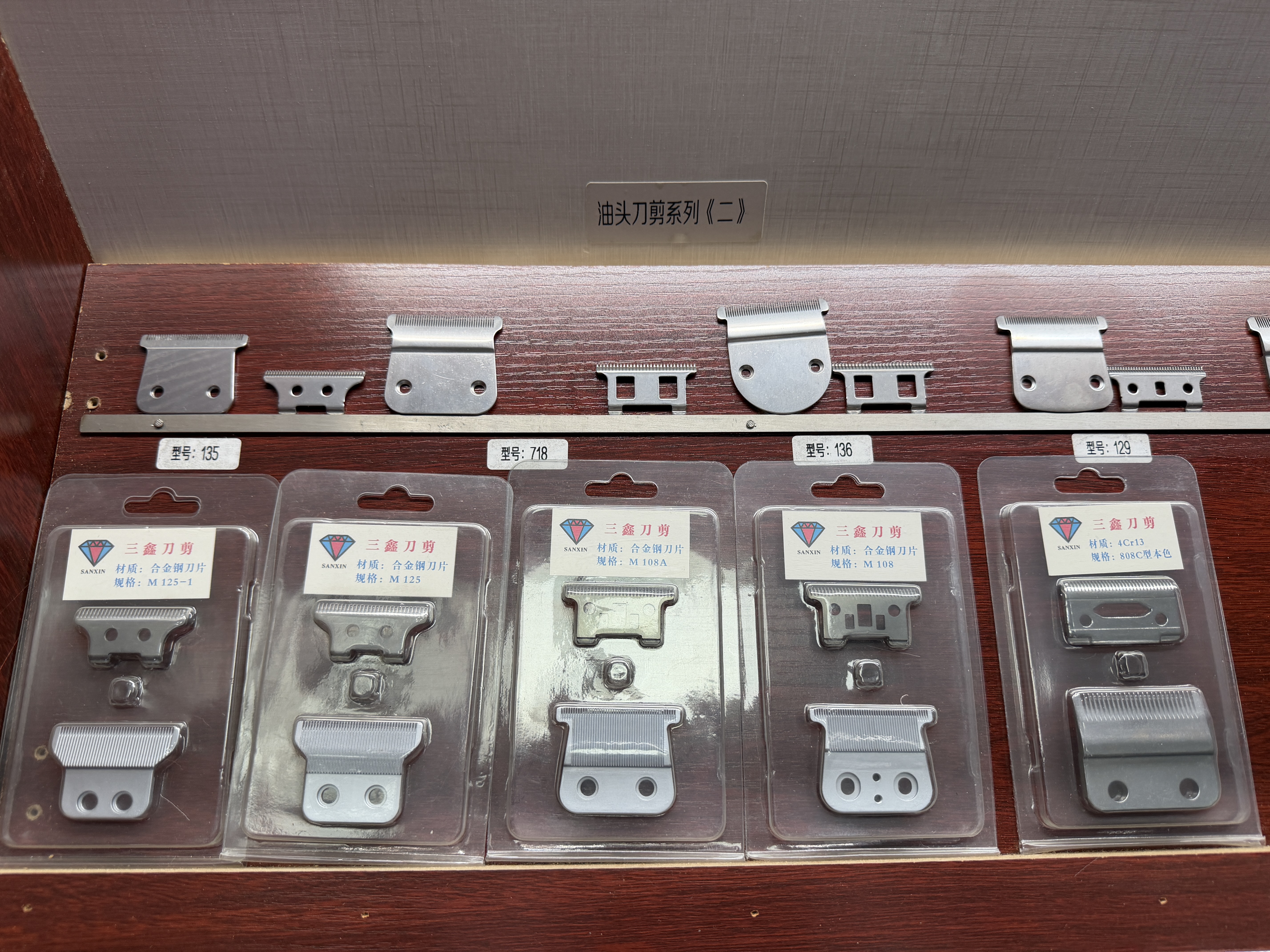
Being direct about this saves everyone time at the RFQ stage.
| We can | We cannot |
|---|---|
| Supply mill certificates, material declarations and heat-treatment records per batch | Write or sign your risk assessment |
| Arrange EN 1811, salt spray and mechanical testing through SGS, Intertek or your nominated lab | Act as your EU Responsible Person — we are not established in the EU |
| Apply batch coding and laser model marking, and hold the records that map codes to lots | Guarantee your artwork is legally sufficient in 27 languages |
| Print packaging with your Responsible Person and importer fields | Issue a GPSR certificate — no such document exists |
| Keep production records so a recall can be scoped to specific lots | Take on your obligations as the brand placing the product on the market |
If you are still choosing between private label, OEM and white label as a business model, start with our private label and OEM manufacturing guide, then work through the commercial mechanics in the OEM sourcing guide.
Related Guides
- How to Source OEM Clipper Blades from China — MOQ, pricing and factory vetting
- Private Label Razors and Clipper Blades — business models compared
- Stainless Steel Clipper Blade Manufacturer Guide — grades, tolerances and FOB pricing
- Why Stainless Clipper Blades Rust in Disinfectant — the material choice behind your care instructions
- How to Start a Clipper Blade Brand — launch sequence and costs