
Ceramic vs Stainless Steel Razor Blades: Which Should You Choose for Private Label? [2026]
Ceramic-coated vs stainless steel razor blades compared for private label brands — coating types, base steel grades, FOB pricing by MOQ, and why solid ceramic does not work on a 0.1mm DE blade.
Quick answer: There is no such thing as a solid ceramic shaving blade in mass production — the term "ceramic razor blade" almost always means a stainless steel blade with a hard ceramic-type coating (silicon-based or diamond-like carbon) applied over a chrome base layer. Solid zirconia ceramic, the material used in kitchen knives and clipper blade edges, is too brittle to survive as a 0.1mm-thick flexible double-edge (DE) blade. For a private label brand, the real decision is not "ceramic or steel" — it is which coating stack to put on top of steel, and that choice changes your cost per blade, shelf marketing claim, and MOQ.
We manufacture OEM razors and clipper blades for brands in 45+ countries, and "can you make us a ceramic blade like the clipper ones" is one of the most common questions we get from razor brand owners who have read our own ceramic vs steel clipper blade content. The physics are completely different between the two product categories, and buyers who do not know that end up asking coating suppliers for something that cannot be built. This guide explains what actually happens on a razor blade coating line, what each coating option costs, and how to decide which one fits your brand.
Why "Ceramic Razor Blade" Is a Coating, Not a Material Swap
A double-edge (DE) razor blade is stamped from a coil of steel roughly 0.1mm thick — about the thickness of a human hair times ten. At that thickness, the blade has to flex slightly as it seats in a razor head or cartridge without snapping. Solid zirconia ceramic (the material used for kitchen knives and for the edge inserts on our own A5 clipper blades) has a fracture toughness that makes it excellent at holding an edge but very poor at flexing — a 0.1mm zirconia strip would crack the first time it bent around a razor head.
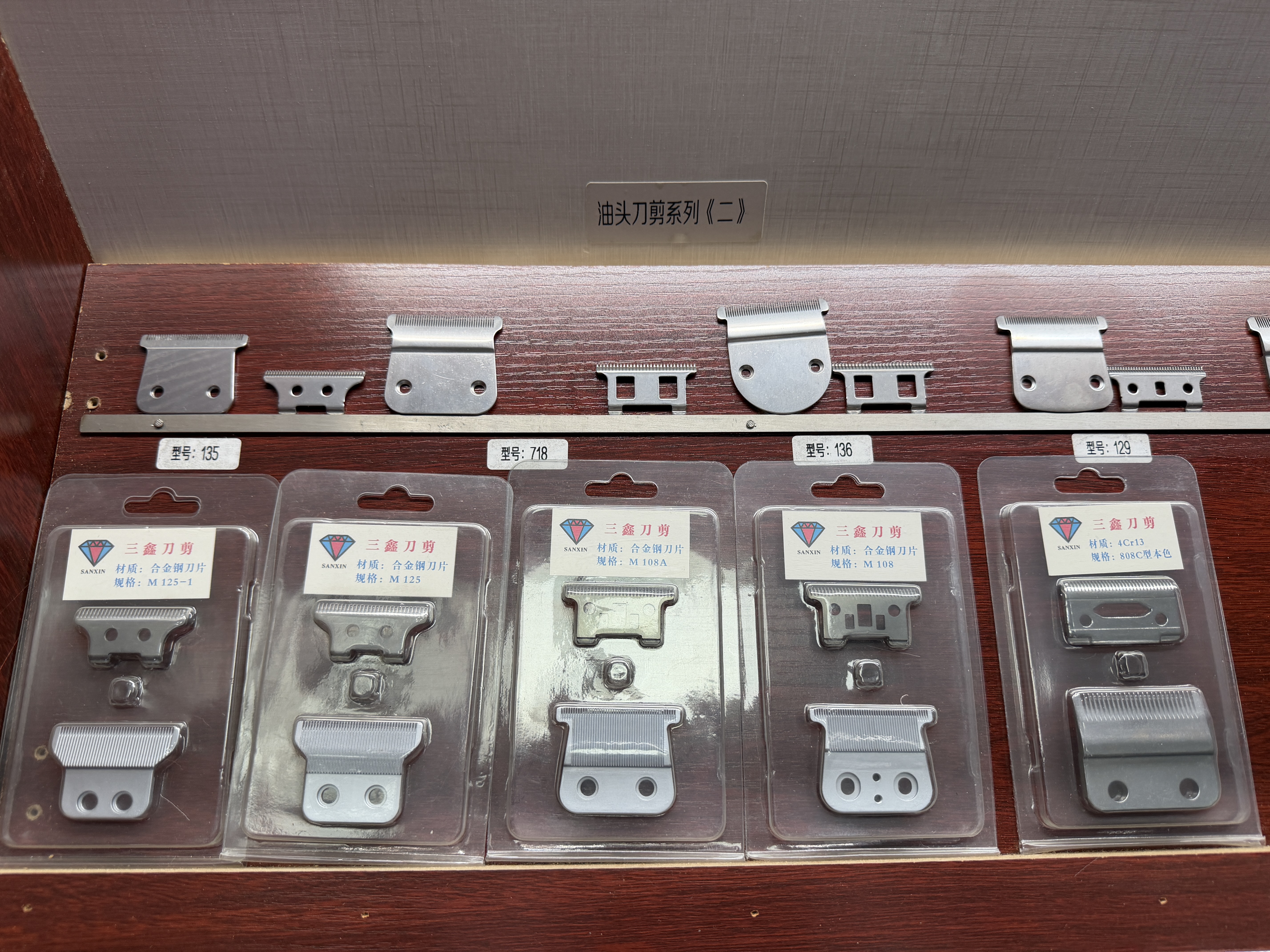
Clipper blade cutters are a different story: the cutting edge sits on a MIM (metal injection molded) body that is 1.5-2mm thick at the working section, rigid and mounted flat against a comb blade with no flex requirement. That is why solid ceramic works for clipper blades but not for shaving blades.
| Product | Typical Thickness | Flex Requirement | Can Use Solid Ceramic? |
|---|---|---|---|
| DE / cartridge razor blade | ~0.08-0.10mm | Must flex into head, zero crack tolerance | No — coating only |
| Straight razor / shavette blade | ~0.15-0.2mm | Rigid, minimal flex | Rare, specialty only — not mass-produced |
| A5 clipper blade (our core product) | 1.5-2.0mm at edge | None — mounted flat and rigid | Yes — see our ceramic clipper blade guide |
The Real Options: Coating Types for Razor Blades
Every mass-market razor blade starts as the same base steel, then goes through a coating stack applied in a vacuum deposition or electroplating line. The coating is what determines glide, corrosion resistance, and how long the edge stays comfortable against skin — the "ceramic" marketing name almost always refers to the top layer in this table.
| Coating | Layer Position | Friction Coefficient | Corrosion Resistance | Marketing Term Used |
|---|---|---|---|---|
| Chrome | Base layer (always) | ~0.35-0.45 | Good | "Chrome blade" / standard |
| PTFE (Teflon) topcoat | Over chrome | ~0.10-0.15 | Good | "Smooth glide" / "comfort coat" |
| Platinum | Over chrome, under PTFE | ~0.30-0.35 | Excellent | "Platinum blade" |
| Titanium nitride (TiN) | Over chrome | ~0.30-0.40 | Excellent | "Titanium blade" |
| DLC (diamond-like carbon) | Top layer | ~0.10-0.20 | Excellent | "Ceramic blade" / "black diamond" |
| Silicon-based hard coat | Top layer | ~0.15-0.20 | Excellent | "Ceramic-coated blade" |
Both DLC and silicon-based hard coats are what suppliers and brands mean when they say "ceramic razor blade." They sit in the same hardness range (roughly 2,000-4,000 HV, versus 600-750 HV for bare chrome), which is why the marketing claim of longer-lasting sharpness is genuine — the coating outlasts an uncoated or lightly coated blade even though the steel underneath is identical.
Base Steel Still Matters More Than the Coating Name
Coating aside, the base steel strip is a low-to-medium carbon martensitic stainless, not the high-carbon 440C we use for clipper blades. At 0.1mm thickness, 440C's higher carbon content (which gives clipper blades HRC 60-62 hardness) makes the steel too brittle to stamp and flex without micro-cracking. Razor blade steel is deliberately softer and more ductile so it can be ground to a finished edge and flexed into a cartridge without failing.
| Steel Type | Approx. Hardness | Ground Edge Angle | Used For |
|---|---|---|---|
| Razor blade steel (13Cr-type, low-carbon martensitic) | HRC 56-58 | 15-19° per side | DE and cartridge blades |
| 420J2 (our lower-tier clipper steel) | HRC 52-55 | N/A — clipper geometry | Budget clipper blades, not razors |
| 440C (our premium clipper steel) | HRC 60-62 | N/A — clipper geometry | Professional clipper blades, not razors |
For a full breakdown of clipper-side steel selection, see our clipper blade steel grades guide. The takeaway for a private label razor brand: do not ask a supplier for "440C razor blades" expecting a clipper-grade upgrade — the correct lever for a better razor blade is the coating stack above, not a harder base steel.
FOB Pricing and MOQ by Coating Tier
Pricing is quoted per 100-blade pack (the standard DE blade retail unit) and scales with how many coating layers are applied and whether the coating line needs a dedicated changeover.
| Coating Tier | FOB Price (100-pack) | Typical MOQ | Shelf Claim |
|---|---|---|---|
| Chrome only | $0.70 - $0.95/pack | 10,000 packs | Standard / value line |
| Chrome + PTFE | $0.80 - $1.10/pack | 10,000 packs | "Smooth glide" |
| Chrome + Platinum + PTFE | $1.00 - $1.40/pack | 10,000-15,000 packs | "Platinum" premium line |
| Chrome + DLC/silicon "ceramic" | $1.20 - $1.65/pack | 20,000 packs | "Ceramic-coated" premium line |
The jump in MOQ for the ceramic-tier coating is not arbitrary — most factories run DLC/silicon coating as a batch process on a shared line with other customers' orders, and the minimum batch size to justify a changeover is higher than for chrome or PTFE lines that run continuously. If your target order is below 20,000 packs, ask whether the factory can slot your run into a shared batch rather than quoting you a dedicated changeover premium.
How to Verify Coating Quality Before You Commit to a Production Run
A "ceramic-coated" claim on a spec sheet is only as good as the process control behind it. Before approving a bulk order, request results from these three tests on your pre-production sample:
- Adhesion test (cross-hatch tape test, ASTM D3359): the coating should show zero flaking when tape is applied and pulled from a cross-hatched section of the blade back.
- Salt spray corrosion test (ASTM B117): coated blades should show no red rust after 24-48 hours; bare chrome alone typically fails well before that mark.
- Shave-cycle or micro-abrasion test: factories with real coating QC can provide edge-retention data from repeated shave-simulation cycles (typically 5-7 shaves for a comfortable claim); if a supplier cannot produce any cycle data, treat the "ceramic" claim as unverified.
Which Should You Choose for Your Brand?
| Brand Positioning | Recommended Coating | Why |
|---|---|---|
| Budget disposable / subscription starter tier | Chrome + PTFE | Lowest cost per shave, MOQ-friendly, still comfortable for occasional use |
| Mid-market DTC brand | Chrome + Platinum + PTFE | Established marketing term consumers already recognize, meaningful corrosion improvement |
| Premium / sensitive-skin niche | Chrome + DLC or silicon "ceramic" | Longest edge life claim, justifies premium price point, differentiates from mass-market blades |
| Sustainability / reusable-razor brand | Chrome + DLC or silicon "ceramic" | Longer edge life directly supports a "fewer blade changes" sustainability claim |
Frequently Asked Questions
Is a "ceramic razor blade" actually made of ceramic?
No. Mass-produced shaving blades are stainless steel with a hard coating (usually DLC or a silicon-based coating) applied over a chrome base. The coating is what earns the "ceramic" name because its hardness (2,000-4,000 HV) is in the same range as technical ceramics, but the blade body underneath is steel. Solid ceramic is used for clipper blade edges, not shaving blades, because razor blades must flex and ceramic is too brittle at 0.1mm thickness.
Are ceramic-coated razor blades better than plain stainless steel blades?
For edge retention and corrosion resistance, yes — a DLC or silicon-coated blade typically holds a comfortable edge through more shaves than a chrome-only blade, and resists rust better in humid bathroom storage. The tradeoff is cost: expect a $0.40-0.70 premium per 100-pack over chrome-only, and a higher MOQ (typically 20,000 packs versus 10,000).
What is the MOQ for private label ceramic-coated razor blades from China?
Chrome-only or chrome+PTFE blades typically start at 10,000 packs (100 blades per pack). DLC or silicon "ceramic" coated blades usually require 20,000 packs because the coating line runs in batches. Some factories will accept a smaller order if your run can be combined into a shared batch with other customers — ask directly rather than assuming the higher MOQ is fixed.
How long does a ceramic coating last before it wears off a razor blade?
A well-applied DLC or silicon coating on a DE blade typically maintains a comfortable edge for 5-7 shaves for an average beard, roughly double the 2-4 shaves typical of an uncoated or chrome-only blade. Coating wear is gradual, not a hard cutoff — comfort declines progressively rather than the blade suddenly becoming unusable.
Can a factory make a solid ceramic straight razor or shaving blade?
Only as a specialty, hand-finished item, and not through the same production line as mass-market DE or cartridge blades. Solid zirconia is rigid enough to work in a fixed, unflexed straight-razor format, but the fracture risk, slow grinding process, and cost make it impractical for standard retail pricing. If a supplier quotes solid ceramic at normal razor-blade prices and MOQ, ask for the material certificate before ordering.
What should I check before ordering ceramic-coated razor blades in bulk?
Request the coating adhesion test result (ASTM D3359 cross-hatch), salt spray corrosion data (ASTM B117, minimum 24-48 hours to no red rust), and any shave-cycle or micro-abrasion test data the factory has on file. Also confirm the base steel grade and blade thickness tolerance (±0.005mm is standard) — a supplier that cannot provide these numbers is likely reselling unverified stock rather than controlling their own coating process.
Related Guides
- How to Start a Private Label Razor Brand from China — full launch process, packaging, and certifications.
- Private Label Clipper Blades & Razors OEM Guide — product selection, customization, and pricing across both categories.
- Ceramic vs Steel Clipper Blades — why solid ceramic works for clipper blades but not razor blades.
- Clipper Blade Steel Grades Explained — 420, 440A, 440C, and carbon steel compared.
- OEM & Custom Manufacturing — coating options and custom mold development.