
How to Choose the Right Clipper Blade: Steel, Coating, Tooth Pattern & Size (Barber's Guide)
Step-by-step guide to choosing clipper blades. Covers steel grades (440C vs carbon vs ceramic), coatings (DLC, titanium, chrome), tooth patterns, edge geometry, and how to match blades to your workflow. Written by a blade manufacturer.
Choosing a clipper blade is not just about picking a brand name. The steel grade, coating, tooth pattern, and edge geometry all affect how the blade cuts, how long it stays sharp, and how it feels in your hand during a 10-hour shift. Most barbers learn blade selection through trial and error — burning through $200-400 in blades before finding what works.
This guide gives you the manufacturer's decision framework: the same criteria we use when designing blades for professional barber brands. By the end, you will know exactly what to look for (and what to avoid) when buying your next set of blades.
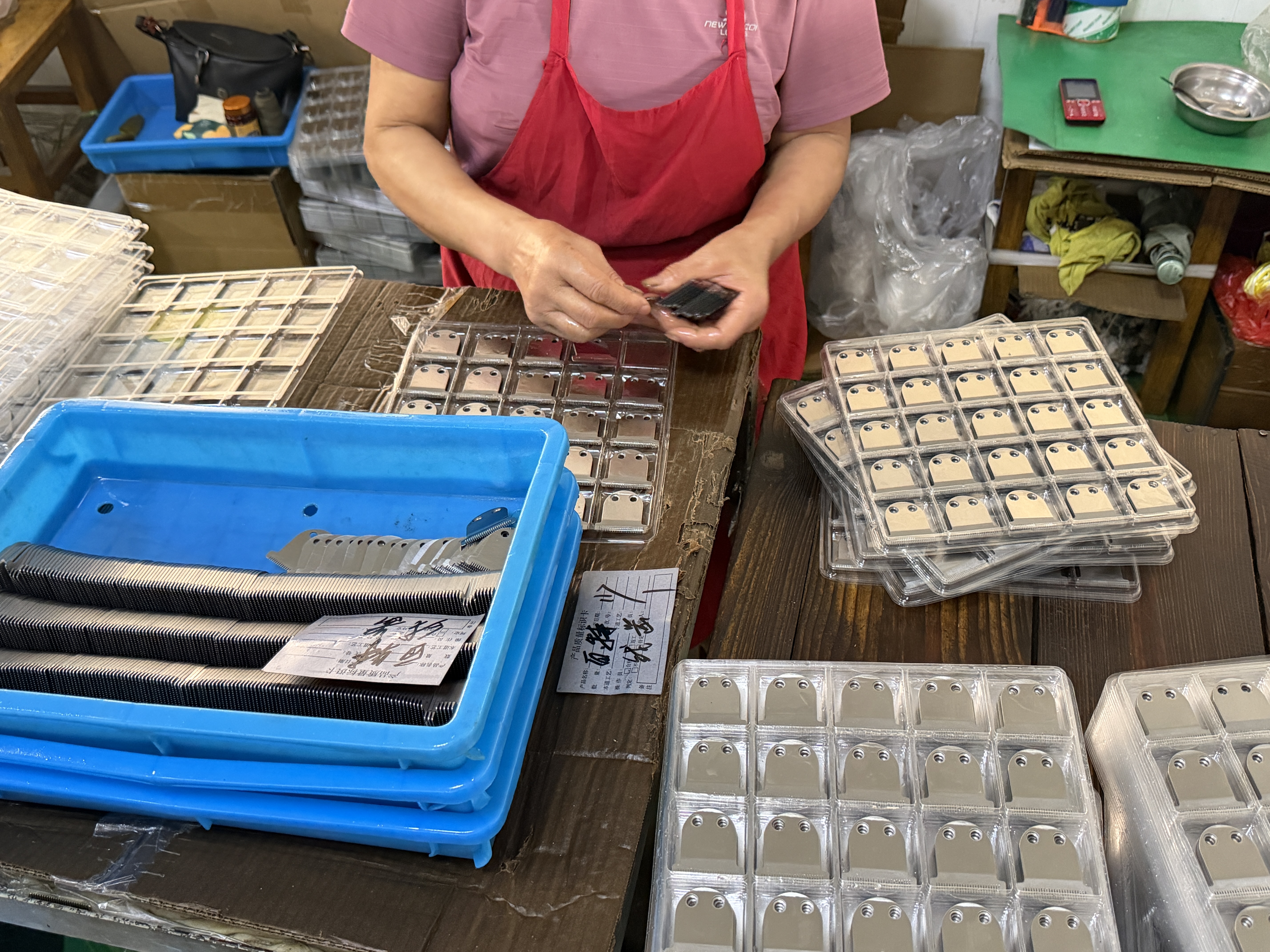
The 5 Decision Factors
When we work with OEM customers designing a new blade, we walk through five decisions in order. The same framework works for barbers choosing replacement blades:
- What are you cutting? (hair type and use case → blade type)
- What steel grade? (edge retention vs corrosion resistance)
- What coating? (performance enhancement vs cost)
- What tooth pattern? (cutting speed vs finish quality)
- What is your maintenance commitment? (high-maintenance carbon steel vs low-maintenance stainless)
Decision 1: Match the Blade Type to Your Work
| If You Primarily Do... | You Need... | Why |
|---|---|---|
| Bulk cutting, classic tapers | Standard taper blade | 0.5-2.5mm range covers 80% of haircut work |
| Skin fades, bald fades | Fade blade | Closes to 0.1-0.2mm — no separate trimmer needed for the fade zone |
| Line-ups, beard outlines | T-blade (zero-gap) | Wide exposed corners for crisp straight lines |
| Detail work around ears | U-blade | Rounded corners prevent nicking on curved contours |
| Pet grooming (all-day sessions) | A5 detachable + ceramic moving blade | Instant size changes + cool running |
| Skin cleanup, head shaves | Foil shaver | 0.0mm cut without blade-to-skin contact |
For a detailed explanation of every blade type, see our complete guide to clipper blade types.
Decision 2: Choose Your Steel Grade
Steel grade is the single most important factor in blade performance. It determines hardness (how long the edge stays sharp), corrosion resistance (how much maintenance you need), and cost. Here is the practical breakdown:
| Steel Grade | Hardness (HRC) | Sharpening Interval* | Rust Risk | Cost | Best For |
|---|---|---|---|---|---|
| 420 Stainless | 50-54 | 2-3 weeks | Very low | $ | Budget/consumer blades only |
| 440A Stainless | 55-57 | 4-6 weeks | Low | $$ | Mid-range, light professional use |
| 440C Stainless | 58-62 | 8-12 weeks | Moderate | $$$ | Professional standard — best value |
| High-Carbon (SK5/1095) | 60-65 | 10-14 weeks | High (rusts!) | $$ | Experienced barbers who maintain religiously |
| Ceramic (ZrO2) | 80+ equiv. | 40-60 weeks | None | $$$$ | High-volume sessions, heat-sensitive work |
*Sharpening intervals assume 8 haircuts/day, 5 days/week professional use with proper cleaning and oiling.
When to choose high-carbon over stainless
High-carbon steel takes a slightly sharper edge than 440C and holds it longer — but it rusts. If you oil your blades after every single use, store them in a dry case, and never leave them exposed to humidity, high-carbon is technically superior. If you sometimes forget to oil, work in a humid climate, or share blades between barbers, stick with 440C stainless. The performance difference is marginal; the maintenance difference is significant.
When ceramic is worth the premium
Ceramic blades cost 2-3x more upfront but last 5x longer between sharpenings. The break-even point for a professional barber doing 8+ cuts/day is approximately 6 months — after that, ceramic saves money on sharpening costs. The real advantage is heat: ceramic generates 75% less friction heat, which matters during long fade sessions and is essential for pet grooming. See our ceramic blade catalog.
Decision 3: Evaluate Coatings
Blade coatings add a thin layer of material over the base steel to enhance specific properties. Not all coatings are equal — some are genuine performance upgrades, others are cosmetic marketing.
| Coating | Thickness | Benefit | Hardness Gain | Cost Premium | Worth It? |
|---|---|---|---|---|---|
| DLC (Diamond-Like Carbon) | 1-3 microns | Ultra-low friction, hardness, wear resistance | +800-1200 HV surface | +40-60% | Yes — genuinely better |
| Titanium Nitride (TiN) | 1-5 microns | Hard surface, corrosion barrier, gold color | +2-3 HRC equiv. | +20-35% | Yes for corrosion protection |
| Chrome Plating | 5-25 microns | Corrosion resistance, shiny appearance | Minimal cutting benefit | +10-15% | Cosmetic mostly |
| Black Oxide | 0.5-1 micron | Mild corrosion resistance, matte look | None | +5-10% | Cosmetic only |
DLC coating is the standout performer. The diamond-like carbon layer creates an ultrasmooth surface (friction coefficient 0.05-0.15 vs 0.4-0.6 for bare steel) that allows hair to slide across the blade instead of catching. The result: smoother cuts, less heat, less pulling, and longer edge life. DLC-coated blades cost more, but for barbers doing 8+ fades per day, the difference is immediately noticeable.
At SUMTHIN, we offer DLC nano coating in 5 colors — black, gold, rose gold, blue, and rainbow. The coating is applied after heat treatment and final grinding to preserve the cutting edge geometry.
Decision 4: Understand Tooth Patterns
The tooth pattern determines how the blade feeds through hair and what kind of finish it leaves. There are three main patterns:
Stagger-tooth
Alternating long and short teeth. The long teeth grab and guide hair while the short teeth cut it. This pattern feeds more aggressively — it pulls hair into the blade efficiently, making it faster for bulk cutting. Stagger-tooth blades are standard on professional clippers (Wahl Senior, Andis Master). They handle thick, coarse hair without bogging down.
Straight-tooth (also called "even-tooth")
All teeth are the same length. Straight-tooth blades provide a smoother, more controlled cut with less aggressive feeding. They are better for blending and finishing passes where you want precision over speed. Some barbers prefer straight-tooth blades for fine or thin hair, where a stagger-tooth blade might cut too aggressively.
Fine-tooth
More teeth per centimeter than standard patterns (14-16 teeth/cm vs 10-12 for standard). Fine-tooth blades leave the smoothest finish and are ideal for finish passes, texturizing, and working with fine hair. They cut slower because each tooth removes less hair per stroke but leave a cleaner result.
Crunch-tooth (wide-tooth)
Fewer, wider teeth with more aggressive feed angles. Designed for cutting through very thick, coarse, or matted hair/coat without bogging down the motor. Common in livestock shearing blades and heavy-duty pet grooming. Not typically used in barbering.
| Tooth Pattern | Teeth/cm | Feed Speed | Finish Quality | Best For |
|---|---|---|---|---|
| Stagger-tooth | 10-12 | Fast | Good | Bulk cutting, thick hair, professional standard |
| Straight-tooth | 10-12 | Moderate | Very good | Blending, finishing, thin/fine hair |
| Fine-tooth | 14-16 | Slow | Excellent | Finish passes, texturizing, detail work |
| Crunch/wide-tooth | 6-8 | Very fast | Rough | Matted coats, livestock, initial passes |
Decision 5: Match to Your Maintenance Level
Be honest about your maintenance habits. The "best" blade that you do not maintain will underperform a "good" blade that you care for properly.
Low maintenance (set it and forget it)
Choose: 440C stainless steel with titanium or DLC coating. Oil once daily, clean between clients with spray disinfectant. Send for professional sharpening every 10-12 weeks. This is the most practical setup for most barbers.
Medium maintenance
Choose: Uncoated 440C stainless steel. Oil after every client, clean with blade wash, dry thoroughly at end of day. Sharpen every 8-10 weeks. Lower upfront cost than coated blades, same base performance.
High maintenance (old-school purist)
Choose: High-carbon steel. Oil after every use without exception. Wipe dry between clients. Store in silicone-treated cloth. Sharpen every 10-14 weeks (carbon holds an edge longer but rusts if neglected for even a day). Rewarding for barbers who enjoy blade maintenance as part of the craft.
Minimal maintenance (pet groomers doing all-day sessions)
Choose: Ceramic moving blades on steel A5 stationary blades. Spray with blade coolant every 15-20 minutes of continuous use. Ceramic does not rust and stays sharp 5x longer. The higher upfront cost pays for itself within 6 months of professional use.
The Blade Quality Test: What to Check When You Receive New Blades
Whether you are buying replacement blades or evaluating an OEM sample, here are the quality checks a manufacturer performs — and you should too:
- Tooth alignment: Hold the blade up to a light source. All teeth should be evenly spaced with no visible gaps or overlaps between the moving and stationary blades.
- Edge sharpness: Gently run a fingertip across the teeth (not along them). You should feel consistent sharpness across every tooth — no dull spots or rough burrs.
- Tension test: Install the blade on your clipper. It should snap on firmly with no wobble. The blade should not fall off if you shake the clipper gently.
- Cut test: Cut a small section of hair. The blade should feed smoothly without pulling, snagging, or chattering. Listen for consistent sound — irregular clicking or buzzing indicates tooth misalignment.
- Heat test: Run the clipper for 10 minutes continuously. Touch the blade surface. A quality blade should be warm but not uncomfortable to hold against skin after 10 minutes.

Common Mistakes When Choosing Blades
- Buying on brand name alone: A $30 brand-name blade uses the same 440C steel as a $12 factory-direct blade — you are paying for the logo, not the metal. Always check the steel grade and hardness specification, not just the brand.
- Ignoring tooth pattern: Using a stagger-tooth blade on fine, thin hair is like using a chainsaw for woodcarving. Match the tooth pattern to the hair type.
- Skipping the oil: No blade survives without lubrication. Oil reduces friction, prevents rust, and extends edge life by 30-50%. A $2 bottle of blade oil protects a $15 blade for months.
- Over-tightening the blade: Cranking down the blade screws too tight warps the blade rail and causes misalignment. Hand-tight plus a quarter turn is sufficient.
- Sharpening too late: A dull blade does not just cut poorly — it generates 2-3x more heat and can cause skin irritation for clients. Sharpen at the first sign of pulling or snagging, not when the blade stops cutting entirely. See our sharpening guide.
Related Guides
- Types of Clipper Blades — Complete overview of every blade type
- Steel Grades Explained — Deep dive into 420, 440A, 440C, carbon steel, ceramic
- Clipper Blade Size Chart — Every blade size in mm
- How to Sharpen Clipper Blades — Professional sharpening techniques
- Blade Oil & Maintenance Guide — Keep your blades cutting like new