
How to Choose a MIM Manufacturer: The Complete Buyer's Checklist [2026]
A practical checklist for evaluating MIM (Metal Injection Molding) manufacturers. Covers certifications, equipment, materials, quality systems, pricing, communication, and red flags to avoid.
Choosing the right MIM manufacturer is one of the most important decisions in a powder metallurgy project. The wrong supplier can cost you months of delays, out-of-spec parts, and failed product launches. The right supplier delivers consistent parts on time, communicates proactively, and becomes a long-term manufacturing partner.
This guide is a practical checklist for engineers, procurement managers, and product designers evaluating metal injection molding companies. It covers every factor you should assess — from certifications and equipment to pricing transparency and communication responsiveness. As a MIM manufacturer ourselves, we know what separates a reliable supplier from a problematic one.
The 10-Point MIM Manufacturer Evaluation Checklist
1. Certifications and Quality Management
Certifications are the baseline filter. Do not invest engineering time evaluating a supplier without confirming these first:
- ISO 9001:2015 — The minimum quality management standard. Any serious MIM manufacturer has this. If they do not, move on.
- IATF 16949 — Required for Tier 1 and Tier 2 automotive suppliers. If your parts go into vehicles, your MIM supplier must have this or be in the process of obtaining it.
- ISO 13485 — Required for medical device components. Covers design control, risk management, and traceability specific to medical applications.
- ISO 14001 — Environmental management. Increasingly required by European OEMs and multinationals.
- NADCAP — For aerospace MIM parts. Covers special process accreditation for heat treatment, non-destructive testing, and materials testing.
Verification tip: Ask for the actual certificate with registration number and audit body. Verify it on the certification body's public database. Some suppliers claim certifications they do not hold, or hold certifications with a different scope than MIM production.
2. In-House MIM Capabilities
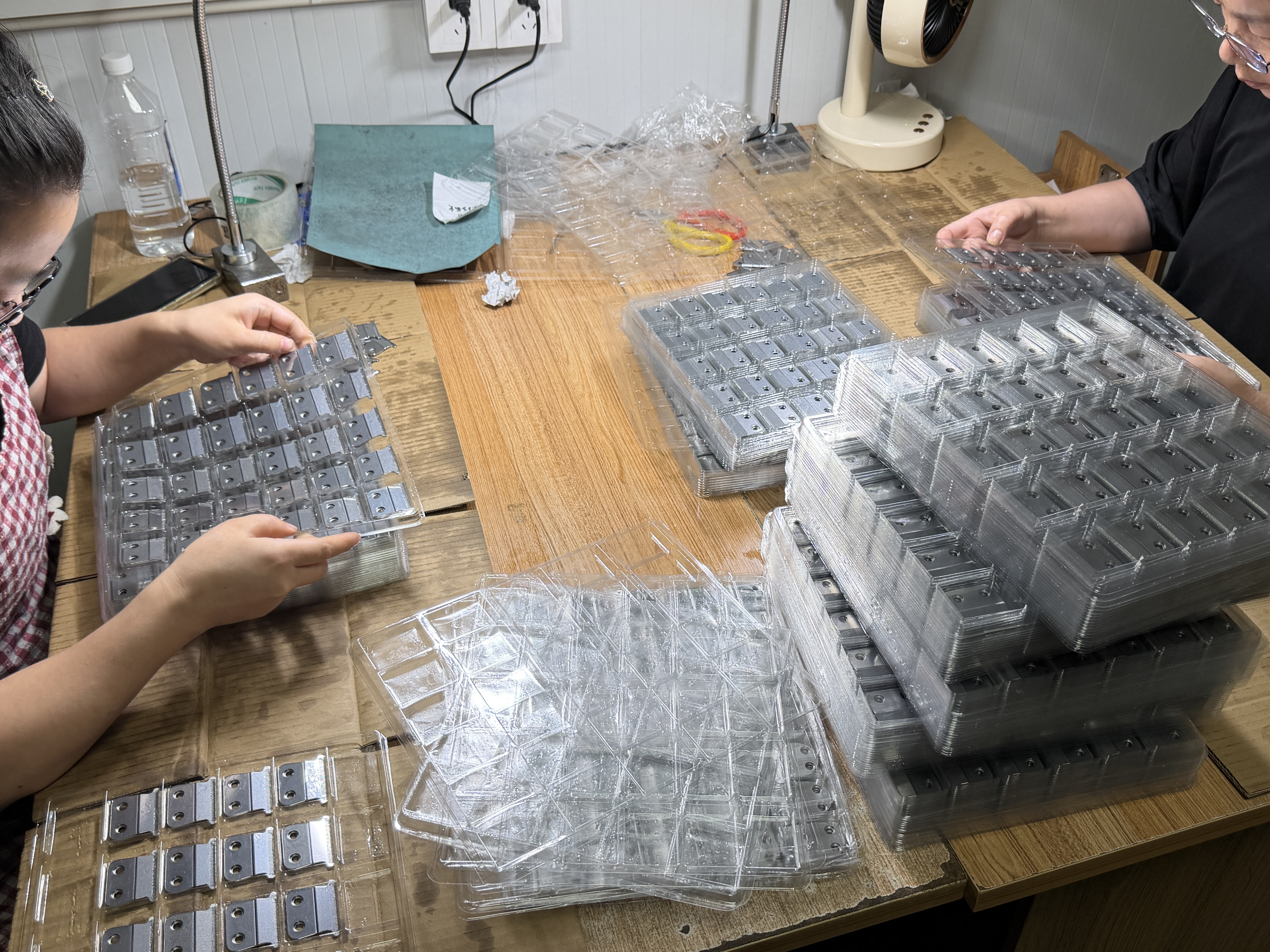
A true MIM parts manufacturer performs all core processes in-house. Subcontracting critical steps introduces quality variability, longer lead times, and finger-pointing when problems arise. Verify in-house capability for:
- Feedstock preparation — Mixing/compounding of metal powder and binder. Suppliers who buy pre-made feedstock from third parties have less control over a critical quality variable.
- Injection molding — Dedicated MIM injection machines (not repurposed plastic molding machines). Look for brands like Arburg, Nissei, or Zhafir with MIM-specific barrel and screw designs.
- Debinding — Catalytic, solvent, or thermal debinding equipment. Outsourcing debinding adds 3-5 days to lead time and a transportation risk for fragile brown parts.
- Sintering — Vacuum and/or atmosphere sintering furnaces capable of 1,400°C+. This is the most capital-intensive step — suppliers who own their furnaces are making a long-term commitment to MIM.
- Tool shop — In-house mold design and fabrication. Suppliers who outsource tooling cannot iterate on molds quickly when dimensions need adjustment.
- Secondary operations — Heat treatment, CNC machining, grinding, surface finishing. Not all suppliers have these in-house, but having them reduces lead time and coordination overhead.
3. Material Portfolio
The range of MIM materials a manufacturer routinely processes indicates their technical depth. A well-equipped supplier should offer at least:
| Material Family | Common Grades | Typical Applications |
|---|---|---|
| Austenitic stainless | 316L, 304L | Medical, food equipment, marine |
| Precipitation hardening | 17-4PH | Aerospace, firearms, high-strength |
| Martensitic stainless | 440C, 420 | Cutting tools, blades, valve seats |
| Low alloy steel | Fe-2Ni, Fe-8Ni, 4140 | Gears, lock parts, tools |
| Titanium | Ti-6Al-4V, CP-Ti | Medical implants, aerospace |
| Tungsten alloys | W-Ni-Fe, WC-Co | Weights, radiation shielding, cutting |
Suppliers who only process one or two materials (typically 316L and 17-4PH) may struggle with non-standard alloys. Ask about their experience with your specific material — how many projects have they completed? What sintered density do they consistently achieve?
4. Engineering and DFM Support
A great MIM manufacturer does more than build what you draw — they help you design for MIM. This means:
- DFM (Design for Manufacturing) review within 1-3 days of receiving your CAD file
- Wall thickness optimization — identifying areas that are too thin (risk of cracking during debinding) or too thick (risk of internal voids during sintering)
- Gate and runner design — injection point placement to ensure complete mold filling without weld lines on critical surfaces
- Shrinkage compensation — mold cavity designed to account for 15-22% sintering shrinkage, verified by mold-flow simulation
- Material recommendation — suggesting the most cost-effective alloy that meets your mechanical and environmental requirements
- Tolerance review — flagging over-toleranced features that will require secondary machining and suggesting as-sintered alternatives
The quality of DFM feedback tells you a lot about a supplier's experience level. A supplier who accepts your drawing without comments is either very confident or not paying attention — and in MIM, the latter is more common.
5. Production Capacity and Lead Times
Assess whether the supplier can handle your volume requirements now and as you scale:
- Current MIM capacity — measured in parts per month. A single injection machine produces 5,000-20,000 green parts per day depending on cycle time. Sintering batch furnaces process 500-5,000 parts per cycle. Ask what percentage of capacity is currently utilized.
- Mold fabrication lead time — typically 15-30 days for a new MIM mold. Faster if the supplier has an in-house tool shop with CNC and wire EDM.
- First article lead time — 4-8 weeks from order to first sample parts. This includes mold fabrication + trial injection + debinding + sintering + QC.
- Production lead time — 2-4 weeks for repeat orders once the mold is proven. Factor in your logistics and customs clearance if sourcing internationally.
- Scalability — can the supplier add capacity (additional mold cavities, additional sintering furnace cycles, second shift) if your volume doubles?
6. Quality Control Systems
Beyond certifications, examine the supplier's actual quality infrastructure:
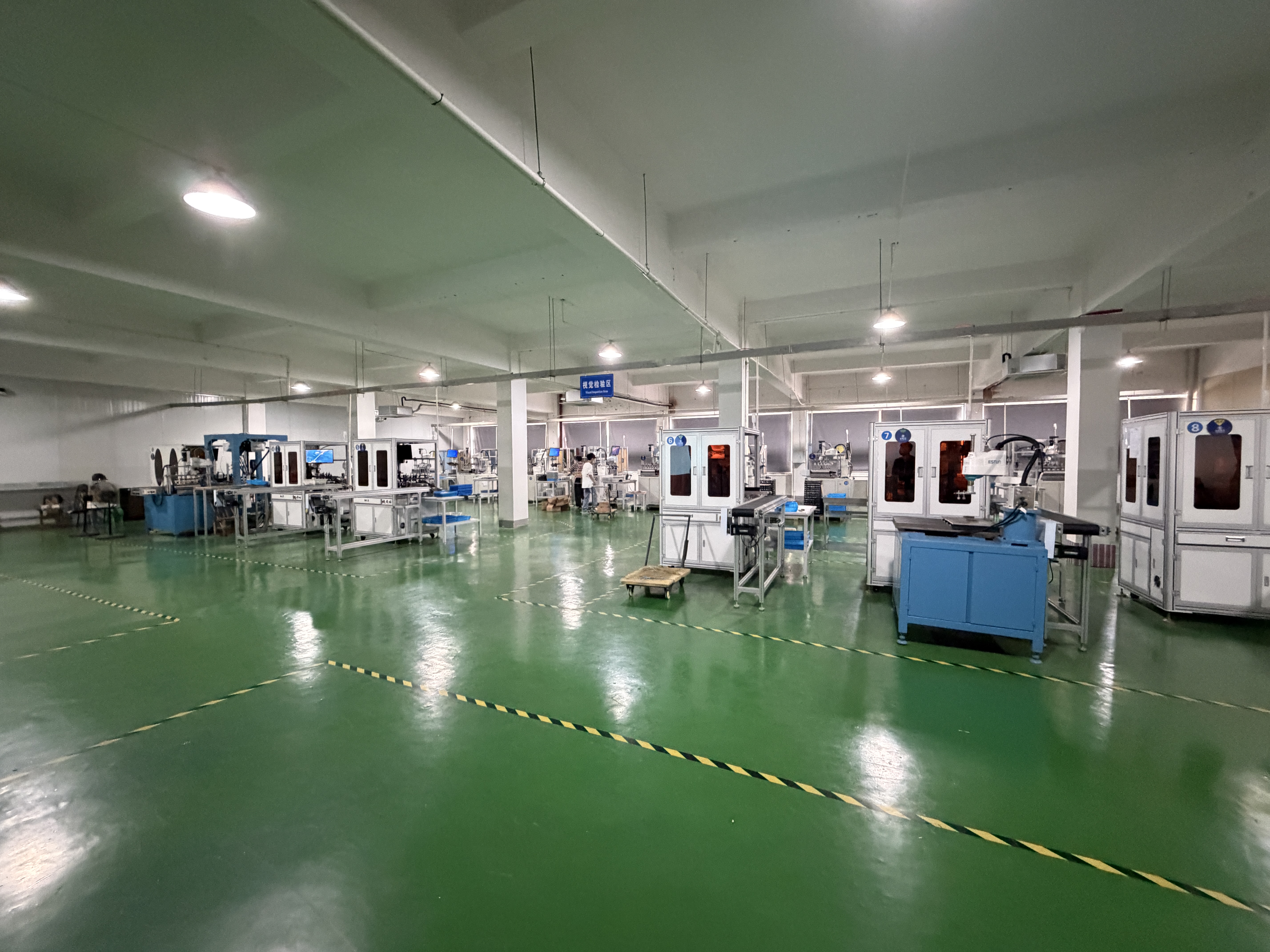
- CMM (Coordinate Measuring Machine) — for dimensional verification of critical features. Ask about measurement frequency (100% inspection vs statistical sampling).
- Rockwell / Vickers hardness tester — for heat treatment verification on every batch.
- Density measurement equipment — Archimedes method or pycnometry for sintered density verification.
- Optical comparator / vision system — for profile and surface inspection.
- Metallography lab — for cross-section analysis, porosity mapping, and microstructure verification.
- Tensile testing machine — for destructive testing of witness samples.
- SPC (Statistical Process Control) — real-time monitoring of critical process parameters (injection pressure, sintering temperature profile, dimensional trends).
7. Pricing Transparency
A trustworthy MIM supplier provides detailed cost breakdowns, not just a lump-sum price per piece:
- Tooling cost — one-time mold investment, clearly separated from per-piece pricing
- Per-piece cost at multiple volumes — quoted at 5K, 10K, 50K, and 100K annual volumes so you can see the volume discount curve
- Material cost component — identified separately so you understand how material price fluctuations affect your part cost
- Secondary operations — heat treatment, machining, coating, and packaging costs itemized
- Mold life and replacement policy — how many shots before the mold needs refurbishment or replacement, and who bears that cost
Red flag: A supplier who refuses to break down pricing components is hiding margin. Request transparency — reputable manufacturers have nothing to hide because their costs are legitimate.
8. Communication and Responsiveness
For international MIM sourcing (especially from China, which produces approximately 60% of global MIM output), communication quality is as important as part quality:
- Response time — a serious supplier responds to technical inquiries within 24 hours, quotes within 3-5 business days
- Language capability — engineering-level English (or your language) for discussing tolerances, material specs, and quality issues
- Project management — a dedicated contact person who owns your project and provides proactive updates (not just responses when you ask)
- Time zone management — willingness to accommodate video calls during your business hours for critical project discussions
- Documentation quality — inspection reports, material certificates, and shipping documents that are clear, complete, and consistent
9. Track Record and References
Ask for evidence of relevant experience:
- Years in MIM production — MIM has a steep learning curve. Suppliers with less than 5 years of MIM experience may still be working through process stability issues.
- Industry-specific experience — a supplier experienced in medical MIM parts understands biocompatibility requirements; an automotive-focused supplier understands PPAP. Match the supplier's experience to your industry.
- Customer references — ask for 2-3 references in your industry sector. A confident supplier will provide them.
- Sample parts — request sample MIM parts (even non-related) to evaluate surface finish, density, and overall quality.
- Capacity utilization — a supplier running at 80-90% capacity is healthy. A supplier at 30% capacity may be struggling for a reason.
10. Logistics and Supply Chain Reliability
- Packaging standards — proper packaging for sintered metal parts (individual wrapping, anti-rust treatment, shock protection). MIM parts are precision components — they cannot be thrown in a box.
- Shipping experience — does the supplier regularly ship to your region? Do they handle export documentation and customs classification (HS codes for sintered metal parts)?
- Safety stock policy — will they hold buffer inventory to protect against shipping delays?
- Dual sourcing — for critical parts, consider qualifying two MIM suppliers. This gives you leverage and protection against single-source risk.
Red Flags: When to Walk Away from a MIM Supplier
In our experience, these warning signs indicate a supplier who will cause problems:
- No factory tour available — they may be a trading company, not a manufacturer.
- Unrealistically low pricing — MIM has real material and processing costs. A quote 50%+ below competitors usually means corners are being cut (lower-grade powder, shortened sintering cycles, minimal QC).
- Cannot provide material certificates — every batch of MIM parts should have traceable material documentation. No certs = no accountability.
- One-size-fits-all sintering — if the supplier sinters all materials at the same temperature and time, they are not optimizing for material properties. 316L and 17-4PH require different sintering profiles.
- No DFM feedback — accepting your drawing without any design-for-manufacturing comments suggests they do not understand MIM-specific constraints.
- Vague lead times — "about 6-8 weeks" without a detailed project timeline is a sign of poor planning and likely delays.
- No experience with your material — if they have never sintered Ti-6Al-4V and your part requires titanium, you are paying for their learning curve.
SUMTHIN MIM Manufacturing Capabilities
Here is how SUMTHIN measures against this checklist:
- Certifications: ISO 9001:2015, ISO 14001:2015, SGS audited
- Facility: 40,000 m² production floor, 360+ employees, 50+ R&D and quality engineers
- In-house processes: Feedstock compounding, injection molding (Zhafir machines), catalytic + thermal debinding, vacuum sintering (Hiper furnaces to 1,400°C+), heat treatment, CNC machining, lapping, polishing
- Materials: 316L, 17-4PH, 440C, Fe-2Ni, Fe-8Ni, 4140, Ti-6Al-4V
- Capacity: 2,000,000+ parts/month, 200+ active mold sets
- Lead time: Mold: 15-25 days. First samples: 20-30 days from mold completion. Production: 15-20 days per order
- Core expertise: 20+ years manufacturing precision clipper and trimmer blades via MIM — our blade quality standards transfer to every custom MIM project
- Communication: English-speaking engineering team, 24-hour response guarantee, dedicated project manager for every order